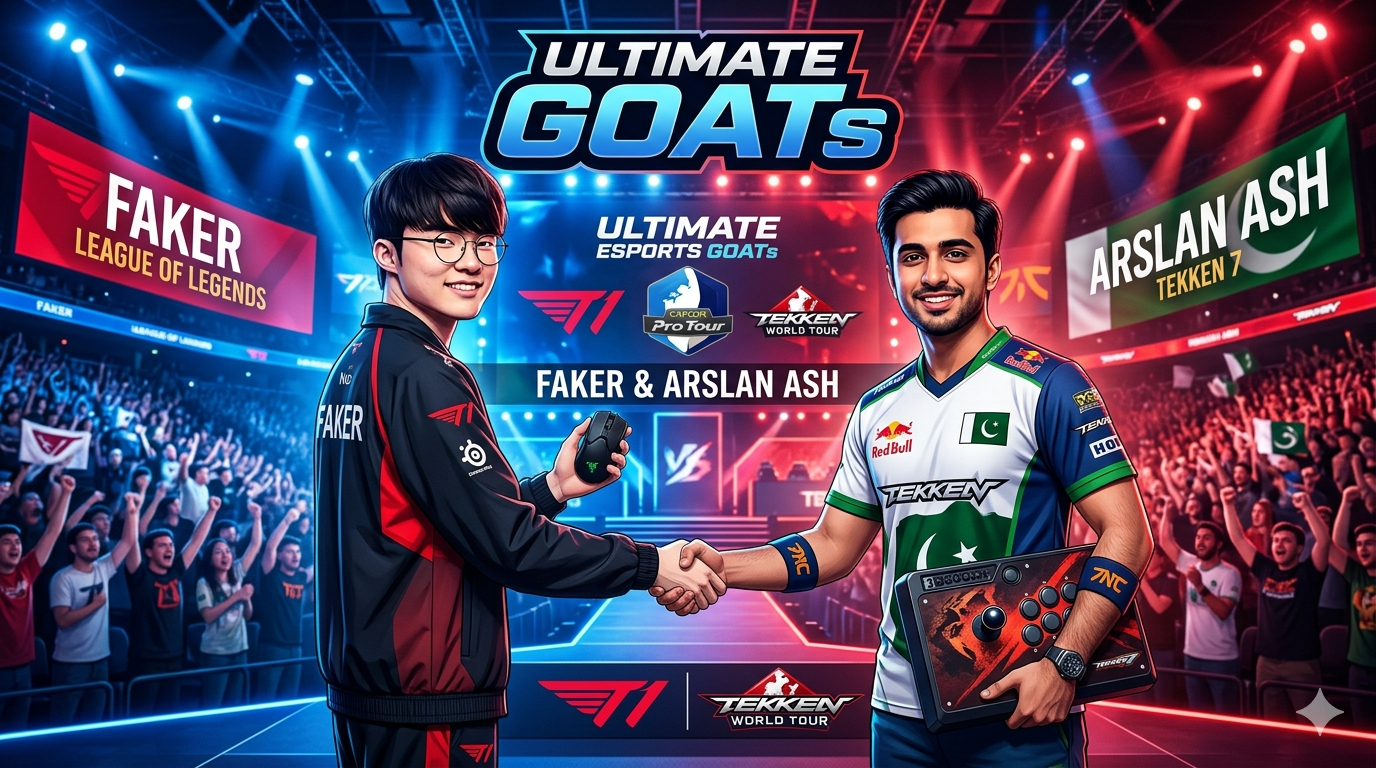
Can we compare Faker, the famous “Unkillable Demon King” of League of Legends, with Arslan Ash, the king of Tekken? At first, they seem to have nothing in common because they play completely different games. Faker leads his legendary team, T1, on the Summoner’s Rift, while Arslan Ash fights alone in intense, split-second fighting game matches. Yet, these two esports legends share a very similar story of success. Both have stayed at the top of their games for years, won the biggest trophies like Worlds and Evo, and made their home countries proud. By looking at their amazing skills and strong mindsets, we can bring these two kings into a single frame and see what makes them the ultimate rulers of competitive gaming.
Two Different Games, One Championship Mindset
To understand how these two players became legends, we have to look at their separate kingdoms. Let’s start with the player who has been ruling the PC gaming world for over a decade: Faker
The Rise of Faker: How T1’s Unkillable Demon King Dominated League of Legends
The story of the “Unkillable Demon King” began in Seoul, South Korea. Before he was famous, a teenage Lee “Faker” Sang-hyeok started playing League of Legends at home under the secret online name “GoJeonPa”. He was so incredibly good that a massive professional team called SK Telecom T1 signed him in 2013 when he was only 16 years old.
The moment he stepped onto the professional stage, his lightning-fast reflexes and genius moves shocked the world. Everyone knew a prodigy had arrived. Over his twelve-year career, Faker has grown into something much bigger than just a pro gamer. Today, he is a massive cultural hero for South Korea, standing proudly alongside K-Pop stars and famous movie actors as a symbol of Korean pride worldwide.
Read More: Fortnite is better than PUBG?
Faker’s Unbreakable LoL Records That May Never Be Broken
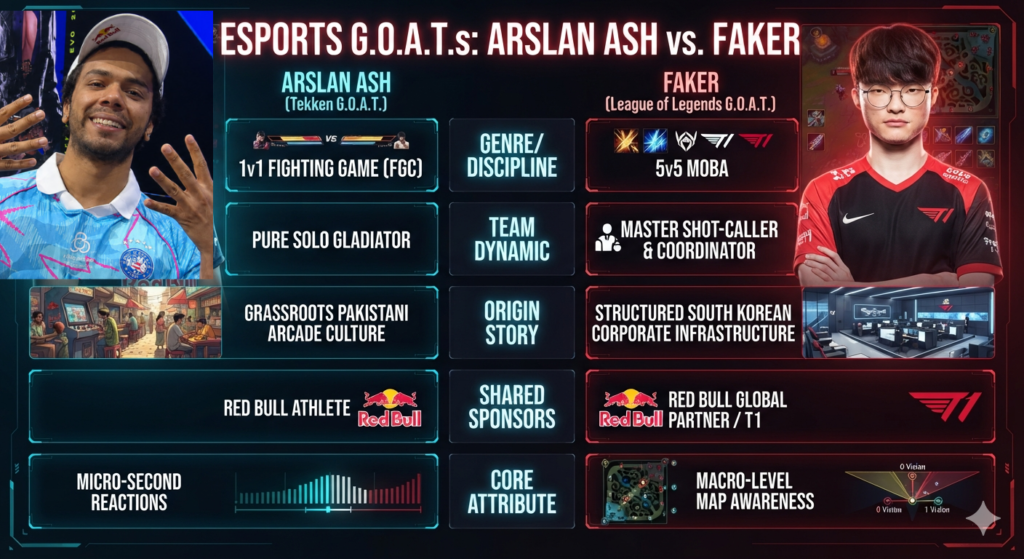
Faker competes on the Summoner’s Rift, the virtual map for League of Legends. It is a highly complex, 5v5 strategy game that is like playing high-speed chess with four teammates. In this difficult world, Faker’s achievements are unmatched:
- Six-Time World Champion: Faker has led his team, T1, to a record-breaking six World Championships (in 2013, 2015, 2016, 2023, 2024, and 2025). No other player has ever come close to this level of dominance.
- The Ultimate Stat Leader: He is the first player in history to score over 1,000 and then 2,000 tournament kills in the Korean professional league (LCK), while playing in more than 700 professional games.
Changing the Business of Gaming Forever
Faker did not just change how the game is played; he changed how the world looks at gaming as a real business. He is no longer just an employee—he is a part-owner of T1 Entertainment & Sports, holding a direct financial stake in a multimillion-dollar company backed by global giants such as Comcast.
Every single time Faker plays a match, millions of fans log on at the exact same time to watch him live, breaking internet viewership records over and over. Because of him, major car brands and technology giants now spend millions of dollars sponsoring esports. He has proven to the world that gaming is a real, professional sport, training like an Olympic athlete at high-tech Red Bull Performance Centers across the globe.
Faker’s Global Impact: The Ultimate Ambassador for Youth and Esports Culture
Faker’s influence stretches far beyond the Rift. Named the official Game Ambassador for the Esports World Cup and Nations Cup through 2028, he stands alongside icons like Cristiano Ronaldo and Magnus Carlsen, giving esports players a global voice.
At home, the Korean National Police Agency honored him as a Senior Officer, entrusting him to lead campaigns against youth cyber‑gambling. With the same discipline that made him a champion, Faker now guides the next generation toward healthier, brighter choices — proving that true greatness is measured not only in victories, but in the lives you inspire.
Who is Arslan Ash? The Pakistani Prodigy Who Became the Tekken GOAT
Just as Faker shapes the future from the Summoner’s Rift, Arslan Ash commands the same legendary respect from the fighting game grid. While Faker commands a five-man army, Arslan fights in complete isolation, where a single frame or a split-second miscalculation means the difference between a trophy and elimination.
The History of a Solo Phenomenon
Hailing from Lahore, Pakistan, Arslan Ash’s rise is a true grassroots story. Long before international sponsorships and streaming deals, his journey began at just eight years old in the dimly lit arcades of Lahore, mastering Tekken 4. Though initially set on a traditional path toward medicine, he chose to follow his passion for gaming — a decision met with skepticism at home. Arslan silenced doubts by dominating Pakistan’s local circuits, proving his skill was unmatched. In 2018, with modest financial help from friends, he traveled to Oman for his first international tournament. That leap of faith marked the turning point, launching him from local champion to a name recognized across the global fighting game community.
Arslan Ash’s Unbreakable EVO Records: The Highest Ceiling in Fighting Games
Arslan Ash has carved his legend in the unforgiving world of Tekken, a 1v1 fighting game where every frame and reaction can decide victory. His dominance is unmatched, reflected in a trophy cabinet that has redefined the fighting game scene.
- The 8-Time EVO King: Arslan is an unprecedented eight-time Evolution Championship Series (EVO) champion. He shocked the world in 2019 by becoming the first unified champion to win both EVO Japan and EVO USA in the same calendar year.
- The 2026 Milestone: Solidifying his legacy, Arslan captured his historic eighth EVO title in Las Vegas, routing a massive 1,355-player bracket to tie all-time fighting game records. He followed this up with an elite top-4 finish at the Esports World Cup (EWC) 2026 in Riyadh.
The Arslan Ash Revolution: Turning South Asia Into a Global Esports Powerhouse
Arslan Ash did not just win titles; he single-handedly put Pakistan on the international esports map. Before his 2019 breakout, the global fighting game community largely ignored South Asian talent. By defeating established international legends, Arslan forced global organizations to recognize Pakistan as a premier hub for fighting games. Today, representing the premium esports organization Twisted Minds and backed as a global Red Bull Athlete, he has opened the doors for a new generation of Pakistani pro-gamers to secure international visas, sponsorships, and careers.
For anyone unfamiliar with Pakistan’s esports scene, one truth stands out: no Tekken player from the country can claim success without Arslan Ash paving the way first. He was the first drop of rain that broke through the drought of doubt, opening doors to respectful esports careers for Pakistani players. Before him, arcade gamers were often dismissed as loafers or wanderers — young men “wasting time” in unhealthy games with no future. Arslan shattered that mindset.
By rising to the very top of global competition, he proved that discipline, resilience, and iron nerves could turn a passion into a profession. Unlike Faker, who never faced such cultural disdain in Korea, Arslan had to fight not only his opponents but also the stigma of his own society. His victories are more than trophies; they are proof that esports can be a path of pride and possibility for Pakistan.
Fun Facts: What Makes Arslan & Faker Similar
- One Continent, Two Legends: Both hail from Asia — Arslan from Pakistan and Faker from South Korea — proving the continent is home to esports greatness.
- GOAT Status: Whether in Tekken or League of Legends, both are celebrated as the Greatest of All Time in their respective titles.
- Age of Excellence: Each is 30 years old, yet still competing at the very top of their games.
- Esports Icons: They’ve turned gaming into global careers, inspiring millions and reshaping how the world views competitive play.