Category: Esports

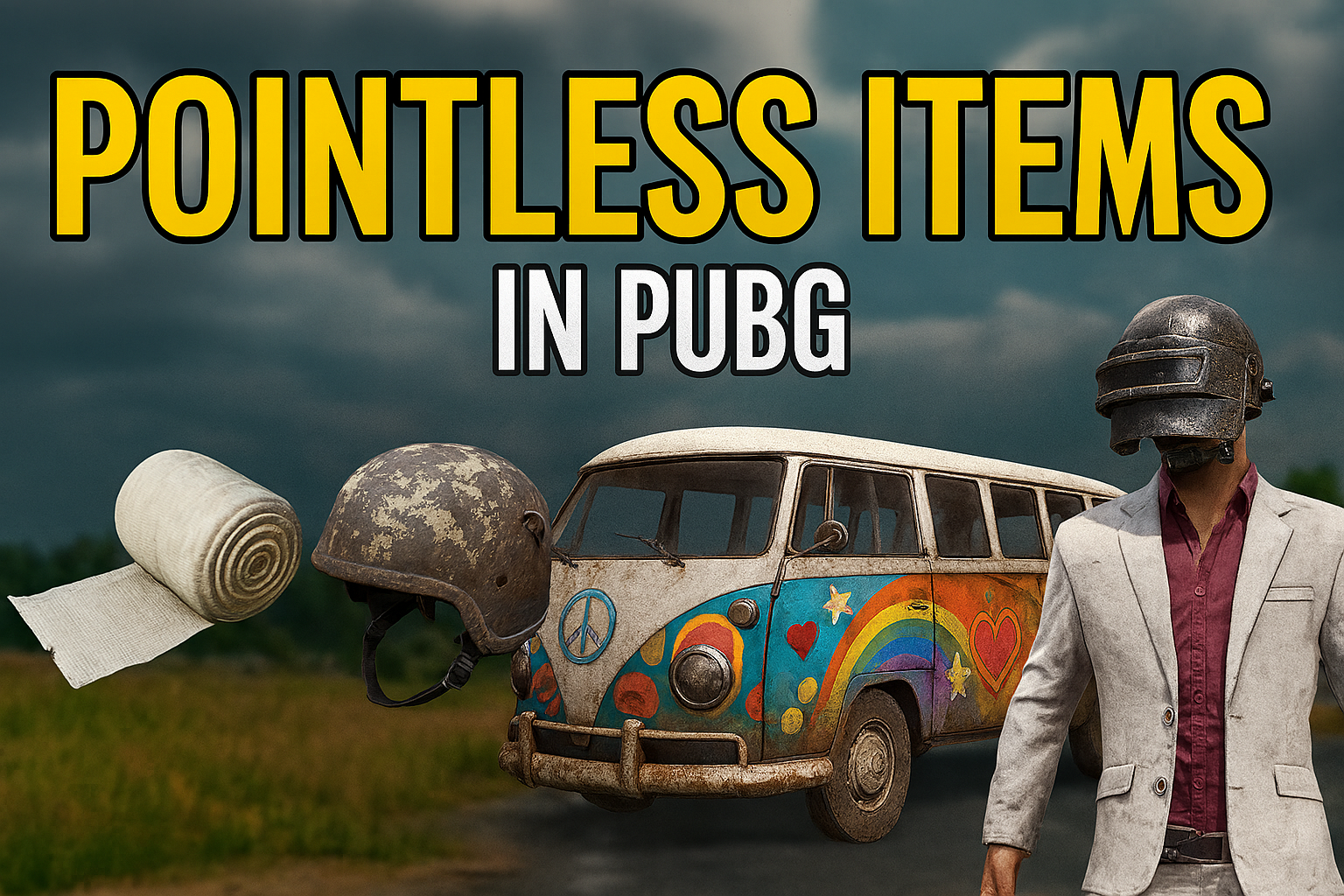
  • 5 POINTLESS & Unnecessary items in PUBG (you will agree)

    5 POINTLESS & Unnecessary items in PUBG (you will agree)

    In PUBG, not every item is useful. Some look helpful but end up slowing you down or taking up space. This list highlights the items players often regret picking up and why they might be better off without them.

    1. Bandages

    In many competitive games, bandages are the go-to remedy for minor injuries, scratches, falls, or quick skirmishes. They’re easy to use, widely available, and often the first aid option players reach for. But let’s be honest: in high-mobility scenarios where you’re constantly sprinting, dodging, or rotating across the map, bandages feel like dead weight.

    The Problem with Bandages in Fast Gameplay

    • Slow Recovery: Bandages offer minimal healing over time, which doesn’t match the pace of modern combat.
    • Zero Utility While Moving: If you’re constantly on the run, their effectiveness drops to zero. You can’t heal and move efficiently.
    • Inventory Clutter: They often take up space without delivering meaningful value in clutch moments.

    Is It Time for Smarter Healing in PUBG?

    Bandages feel outdated; slow, clunky, and nearly useless when you’re on the move. In today’s fast-paced matches, healing needs to be quick, responsive, and tactical.

    Imagine:

    • Auto-injectors that heal while you run
    • Tiered medkits that focus on critical wounds
    • Cooldown-based healing pulses that boost team synergy

    Bandages had their moment in slower gameplay. But now, the meta demands agility and smarter resource management. It’s time for healing mechanics that adapt, react, and elevate the fight.

    2. Used Helmets & Vests

    Are Worn-Out Armors Worth It? Rethinking Durability in High-Stakes Combat

    In the heat of battle, every second and every scrap of protection counts. But let’s face it: used armors and low-durability helmets often feel like false hope. They offer brief protection, a momentary defense, before giving way under pressure.

    The Harsh Truth About Low-Durability Gear

    • Minimal Protection: Once an armor’s durability drops, its effectiveness plummets. It barely absorbs damage, making it more symbolic than strategic.
    • Short-Term Lifeline: Helmets might save you from a single headshot, but they rarely survive the next.
    • Inventory Drag: Carrying worn gear adds weight without real value, especially in long rotations or endgame zones.

    Time for a Smarter Armor System?

    What if instead of clinging to broken gear, players could:

    • Salvage parts to reinforce better armor?
    • Fuse multiple damaged pieces into a single, more durable unit?
    • Deploy temporary energy shields that scale with movement or zone pressure?

    These changes wouldn’t just look cool; they’d make gameplay smarter and more strategic.

    Something is better than Nothing… But Not for Long

    Yes, a cracked helmet is better than no helmet. But in a game where milliseconds decide survival, false security can be fatal. It’s time to evolve beyond “better than nothing” and introduce gear that adapts, endures, and empowers.

    3. Quickdraw Magazine

    Why Quickdraw Mags Often Get Ignored in PUBG

    Some players even argue that if an Extended Mag isn’t available, it’s better to skip the attachment slot entirely than settle for a Quickdraw. It’s a harsh take, but it reflects how competitive the meta has become. In a game where milliseconds matter, capacity often beats speed.

    4. Hippie Van

    In PUBG, mobility can mean survival. Whether you’re rotating to the next zone or fleeing a firefight, your vehicle choice matters. And while the hippie van might look fun and nostalgic, it’s often seen as a liability on the battlefield.

    Why Players Avoid the Hippie Van

    • Too slow to escape: Its low speed makes it hard to outrun danger or reposition quickly.
    • Huge target: Its bulky frame is easy to spot and even easier to hit.
    • Poor handling: Navigating tight terrain or dodging enemy fire feels clumsy and risky.
    • No stealth factor: Its colorful design and loud engine grab attention, exactly what you don’t want in a survival game.

    Better Alternatives Exist

    Most players prefer:

    • Dacia for speed and control
    • Motorbikes for quick escapes
    • Pickup trucks for balance between cover and mobility

    These vehicles offer better performance without turning you into a rolling billboard.

    Cool looks aren’t enough

    The hippie van might be fun to look at, but in PUBG’s high-stakes combat, it’s more of a trap than a tool. It’s slow, loud, and hard to defend. Unless you’re roleplaying or trolling, most players agree: choose survival over style.

    5. Cosmetic Clothes

    In the battlegrounds of PUBG, helmets and vests are more than fashion, they’re survival. They absorb bullets, deflect headshots, and often decide whether you live to see the next circle. But what about the rest of your wardrobe? The trench coats, ghillie suits, neon tracksuits, and branded collabs; do they serve a purpose beyond the mirror?

    The Truth About Cosmetic Clothing

    • No gameplay advantage: Unlike armor, cosmetic outfits offer zero protection or stat boosts.
    • Visual clutter: Over-looting clothes can make your character bulkier or more visible; especially in stealth zones.
    • Inventory illusion: While they don’t weigh you down mechanically, they can clutter your visual identity and distract from tactical focus.

    Just a Show-Off?

    Some players argue that excessive cosmetics are just vanity loot; a way to flex skins, not skill. And in a game where every second counts, flashy outfits can feel like a liability, not a legacy. so why carry dead weight? Leave the fashion, keep the firepower.

    For More Read:

  • Godzilla’s Back in PUBG, But Is It Still Epic?

    Godzilla’s Back in PUBG, But Is It Still Epic?

    Godzilla has always held a special place in my heart. The first time I saw it appear in PUBG; I was instantly hooked. If you’re a true Godzilla fan, you probably felt the same rush of excitement. This article is for everyone who can’t resist the thrill of seeing the King of Monsters step into the battlegrounds of PUBG. And if you are curious enough about the Godzilla X-Suit in PUBG Mobile then connect till the end. Here’s what it includes, how it works, and why it’s a fan favorite this season.

    What Is an X-Suit in PUBG Mobile?

    An X-Suit is one of PUBG Mobile’s most premium outfit types, designed to impress and engage. Unlike regular skins, X-Suits are upgradeable mythic outfits that evolve visually and unlock exclusive features as you level them up. Think of them as status symbols in the game: rare, flashy, and packed with custom animations.

    What’s Included in an X-Suit?

    Each X-Suit typically comes with:

    • Multiple upgrade levels (up to 7 stars), unlocking new visual effects
    • Lobby entry emotes and kill effects
    • Exclusive spawn island animations
    • Themed voice lines or interactions
    • Matching accessories like helmets, backpacks, and weapon skins

    PUBG Mobile x Godzilla 2025

    The 2025 Godzilla collaboration brings a fresh wave of kaiju-inspired content to PUBG Mobile, now live on both Android and iOS. Here’s what players can expect:

    • Mythic Outfit Sets: Unlock Godzilla and Burning Godzilla X-Suits with evolving visual effects and exclusive emotes.
    • Kaiju Skins: Suit up with themed sets for King Ghidorah and Mechagodzilla—each with their own cinematic flair.
    • Themed Vehicles: Ride into battle with monster-styled motorcycles, gliders, and jeeps designed to match the event’s aesthetic.
    • Mini Companions: Equip miniature buddies like Burning Godzilla and King Ghidorah for added flair in the lobby and spawn island.
    • Event Challenges: Complete limited-time missions, prize paths, and spin-based draws to unlock premium cosmetics and gear.

    This crossover is a full gameplay experience that blends PUBG’s tactical edge with the cinematic power of classic kaiju lore.

    Godzilla Crate Rewards

    During the PUBG Mobile x Godzilla 2025 event, players can unlock a curated selection of kaiju-themed gear, including:

    • The Burning Godzilla Costume – a mythic-tier outfit radiating apocalyptic energy
    • The Classic Godzilla Set – a tribute to the original cinematic icon
    • Helmets, backpacks, and other exclusive accessories inspired by legendary kaiju design

    Godzilla Lucky Spin

    Unleash kaiju power with every spin.

    • Collect exclusive companion pets like Mini Burning Godzilla and King Ghidorah
    • Unlock premium cosmetic upgrades through dynamic, spin-based mechanics

    When did the Godzilla X-Suit Launch?

    The first Godzilla-themed suit in PUBG Mobile was part of the Godzilla vs Kong collaboration, which launched around May 2021. That event introduced kaiju-inspired outfits, themed crates, and even in-game appearances of Godzilla and Kong on the Erangel and Livik maps.

    While it wasn’t called an “X-Suit” at the time, it laid the groundwork for future mythic collaborations—like the Godzilla X-Suit released in March 2025. The newer version is far more advanced, with upgradeable visuals, custom kill effects, and cinematic lobby entries.

    This latest Godzilla X-Suit is a part of PUBG Mobile’s 7th anniversary collaboration with Toho Co., Ltd. It’s the second major Godzilla collab after the earlier Godzilla x Kong event, but this one focused more on cosmetics than map changes lootbar.gg.

    What Can You Do with It?

    In-game, the Godzilla X-Suit:

    • Makes your character stand out in lobbies and spawn islands
    • Adds custom kill effects and victory animations
    • Signals prestige—especially in ranked matches or tournaments
    • Can be paired with Godzilla-themed weapon skins and buddies for full immersion

    Why Mythical Creatures Work So Well

    Mythic beasts like Godzilla bring a layer of fantasy and lore to PUBG’s gritty battlegrounds. They:

    • Break the monotony of military realism
    • Let players express identity through cinematic skins
    • Create moments of awe—especially when a glowing Godzilla suit enters the lobby

    Ratings & Popularity

    While PUBG Mobile doesn’t publish formal ratings, community response has been overwhelmingly positive:

    • Players love the visual polish and monster-themed emotes
    • It’s considered one of the most coveted mythic suits of the year
    • Social media and YouTube are flooded with crate openings and lobby showcases

    Personal Preference

    Old is gold, no doubt! I was in awe of Godzilla’s aura—but giving it a human face? Honestly, that felt a bit cringe. The original was way better, at least to me. Still, Godzilla’s comeback in PUBG is epic. Enjoy the iconic X-Suit while it lasts!

    Similar Reads:

  • Is PUBG Really Dead?

    Is PUBG Really Dead?

    I’ve seen countless discussions about PUBG and especially PUBG Mobile (PUBGM) across social media, gaming forums, and YouTube. Everywhere I look, players are saying the same thing: PUBG is dying. The latest updates have sparked controversy, with many fans calling the new graphics “ridiculous,” “cartoonish,” and “childish.” For a game once known for its gritty realism and intense battle royale experience, this visual shift feels completely out of place.

    PUBGM’s transformation has left many longtime players confused and disappointed. The game’s serious tone seems lost beneath flashy cosmetics and arcade-style gameplay. Is this the evolution of PUBG—or the end of what made it iconic?

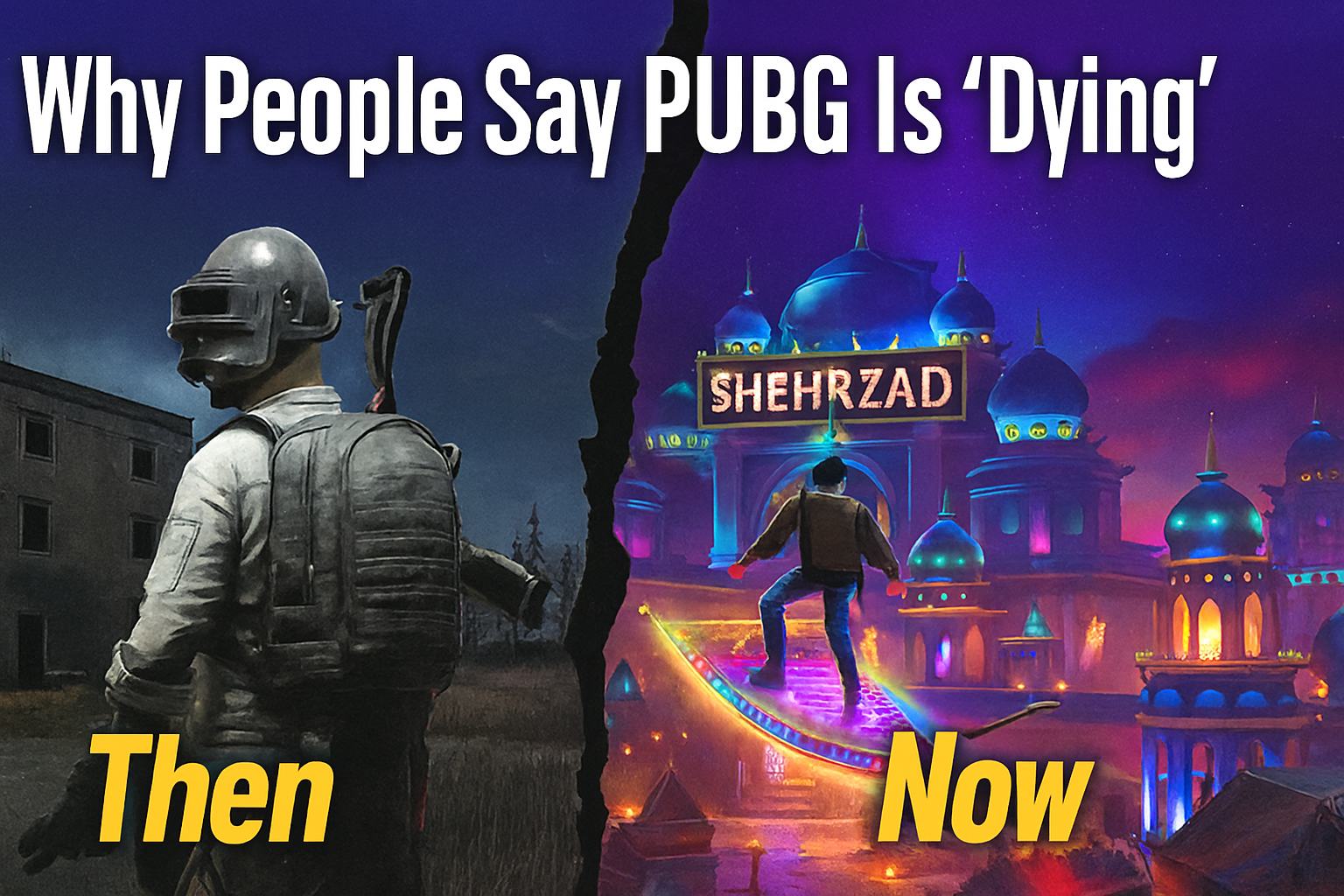
    Why People Say PUBG Is “Dying”

    Many players who started playing PUBG when it first launched in 2017 became fans of its realistic graphics and intense gameplay. The original version felt raw, immersive, and serious—exactly what battle royale fans wanted. But over time, the game changed. With newer updates, PUBG began to look more cartoonish, similar to Fortnite. This shift disappointed many longtime players who missed the tense, survival-focused experience they fell in love with.

    “Pubg gave me one of the best and beautiful memories , the slow pace and long 40 min matches , one life , every seconds feels like someone gonna kill me , the haunt of footsteps and gunshots, abandoned building and bridges , realistic graphics and movements , dark and scary war like environment , winning with 3+kills used to feel like heaven , and now it has become a fashion show all colorful ,full of skins , toxic players who only play for kills . this is not the pubg which i used to play 6 years ago.”

    “From a realistic game to Fashion Show.”

    “Pubg went from realistic to avarage mobile game.”

    So, Nostalgia is one reason for players to drop the game.

    Ridiculous Collaborations of PUBG

    PUBG Mobile has become infamous for its wild, unexpected, and sometimes downright ridiculous collaborations. While some collabs boost engagement and bring in new audiences, others leave longtime fans wondering if the game has lost its gritty battle royale soul. Let’s dive into the most outrageous ones:

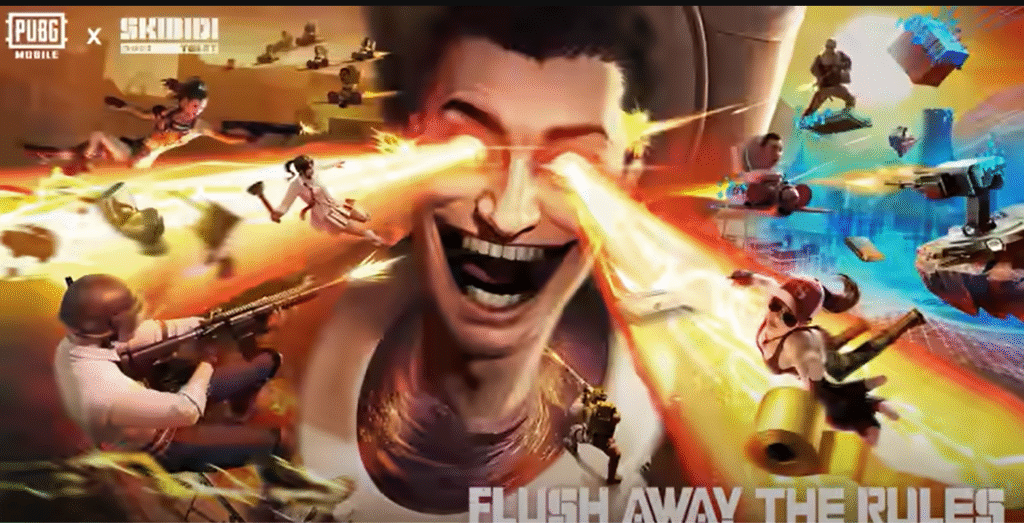
    PUBG MOBILE X Skibidi Toilet

    screenshot (68)

    PUBG MOBILE teamed up with the viral Skibidi Toilet meme—and the result was pure chaos. Players had to fight giant toilets with laser eyes, dodge crazy animations, and survive in maps filled with meme madness. The update even ran in HDR mode, making everything look wild and over-the-top.

    It’s one of the strangest updates PUBG has ever released. Some players loved the fun; others missed the serious battle royale vibe. Either way, it got everyone talking.

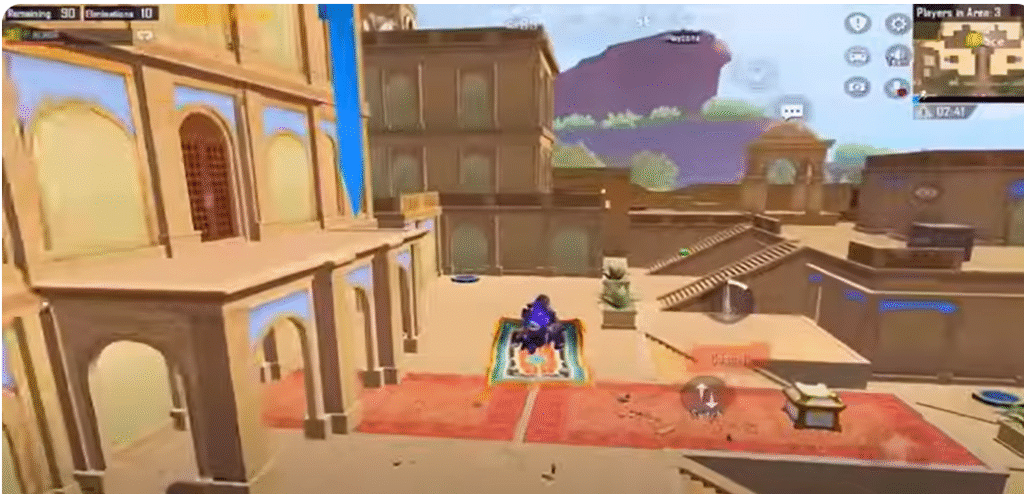
    Arabian Nights x PUBG MOBILE: A Fantasy-Themed Collab

    The update was timed with Ramadan and targeted players in the MENA region, blending gameplay with regional folklore and festive vibes.

    This update officially known as the 3.1 update, released on March 12, 2024, created huge hype when it launched. Players were excited to explore magical desert cities, fly on carpets, and use genie grenades in battle. The game looked fresh and different, and for a moment, it felt like PUBG was reinventing itself. But that excitement didn’t last. Many longtime fans felt the fantasy theme clashed with PUBG’s original war-like atmosphere. Instead of gritty survival, the game now looked more like a cartoon.

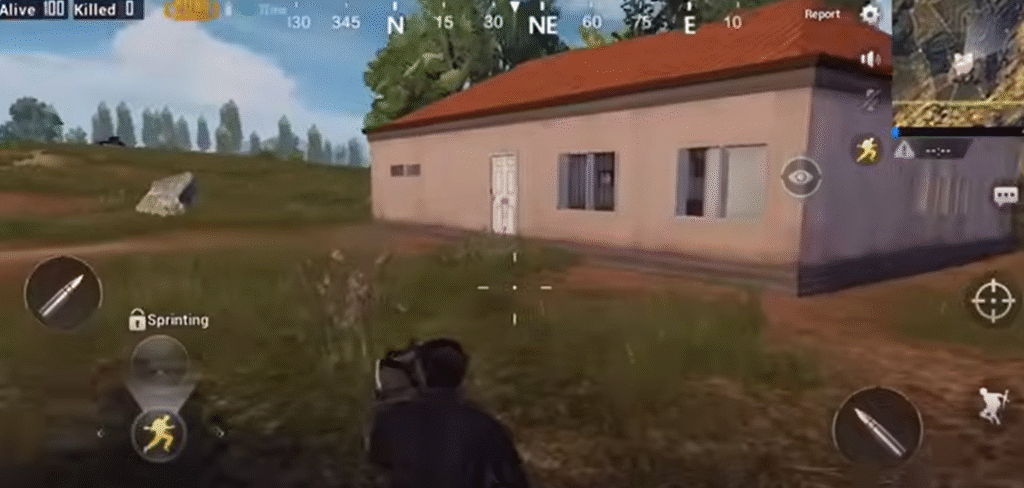
    Then

    screenshot of pubg gameplay from a video on youtube channel Glad2be1000

    And Now

    A screenshot of arabian nights update in pubg  form Glad2be1000

    As more updates followed with glowing toilets, dancing ghosts, and flying carpets, loyal players started losing interest. These flashy changes may attract new users for a short time, but they’re slowly pushing away the core community that made PUBG great in the first place.

    Magic Mirror Castle – Spooky Soirée (Erangel 4.0)

    Erangel was once a war-torn survival zone. Now? It’s home to haunted castles, ghost pets, and flying brooms. The Magic Mirror Castle introduced supernatural loot, teleportation mirrors, and eerie green skies. Tactical realism? Gone. Welcome to Halloween fantasy.

    But the question after all this confusion & chaos is still there.

    is PUBG really dead? are people going to stop playing it? Not really!

    Krafton and Tencent are still heavily investing in the franchise. Tencent’s LightSpeed & Quantum Studio continues to develop PUBGM globally, while Krafton expands its AI and game studio portfolio. And when a game is still generating revenue—over $126 million monthly in 2025—it’s hard to call it dead.

    Even after statistical declines, PUBG Mobile remains in the top 3 most played mobile games worldwide, alongside Roblox and Candy Crush Saga. That’s not just survival—it’s called maturity.

    Despite all the criticism about cartoonish updates and fantasy-themed chaos, PUBG MOBILE is securing its place among the biggest esports titles in the world.

    In 2025, PUBG MOBILE secured its spot in the prestigious Esports World Cup, hosted in Riyadh, Saudi Arabia, with a jaw-dropping $3,000,000 USD prize pool.

    So, here is the Conclusion

    PUBG MOBILE is living, evolving battleground of emotions, memories, and ambition. The developers are still investing, players are still playing, talking, ridiculing, enjoying, and reminiscing. Stats may rise and fall, but one truth remains: the game is still moving forward.

    Two distinct mindsets now shape the community. On one side are the veterans—the loyal fans who fell in love with PUBG’s original war-like intensity, the 30–40-minute matches, the haunting footsteps in abandoned buildings, and the raw thrill of survival. For them, PUBG was more than entertainment—it was an immersive experience. But then came the turning point. The makers weren’t afraid to experiment. They introduced bold collaborations with Sonic the Hedgehog, Arabian Nights, Spooky Soirée, and ghostly companions. These updates brought color, chaos, and creativity.

    And while some longtime players felt alienated, a new generation embraced the change. Today’s players are grinding hard, mastering new mechanics, investing real money, and even building careers through esports tournaments with million-dollar prize pools. PUBG MOBILE now stands at a crossroads—nostalgia versus innovation, realism versus fantasy. The choice is yours: stay and play or go and grow. Either way, the battleground is still alive—and it’s waiting.

    Now YOU tell: Is PUBG evolving or losing its soul? Tell us where you stand.

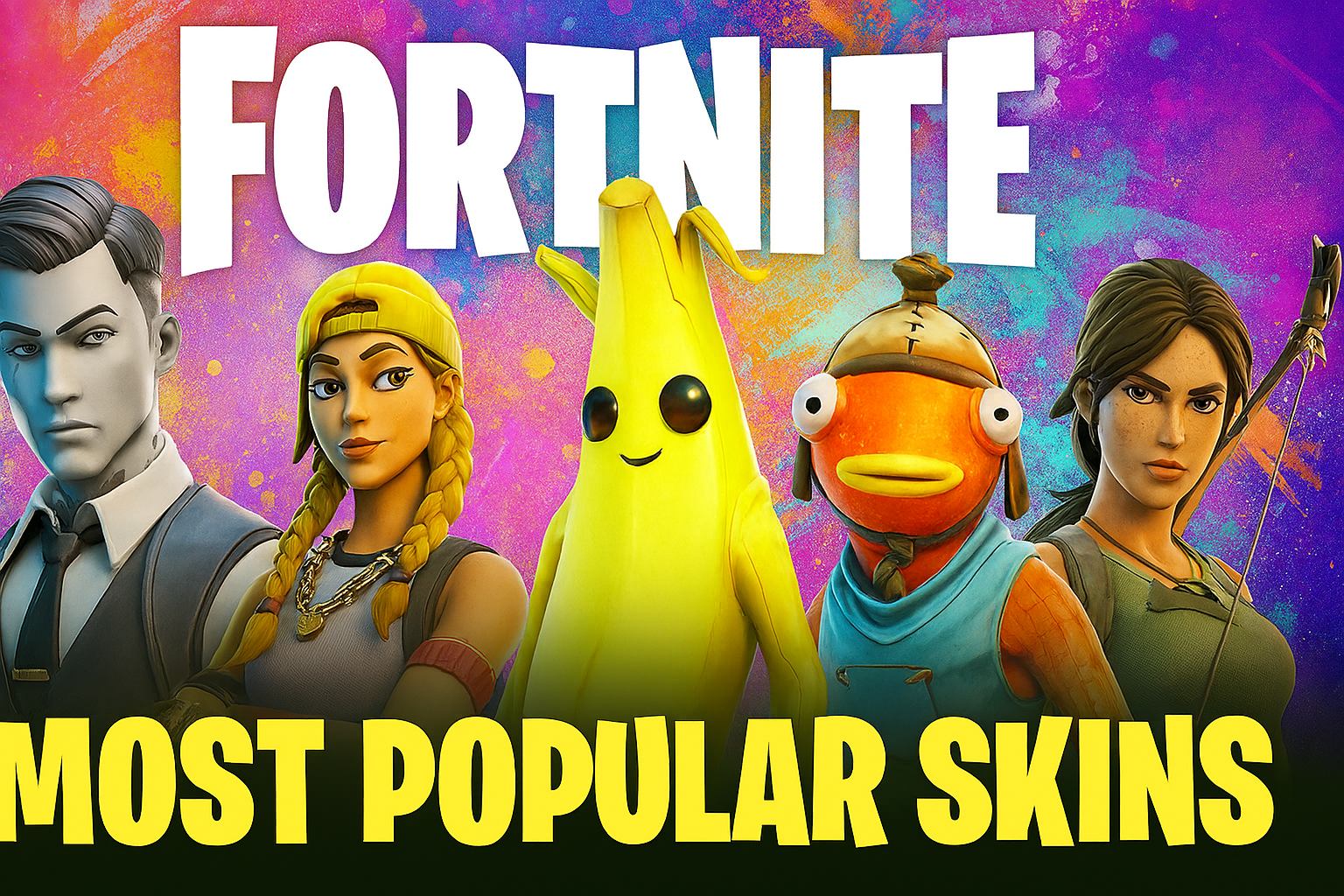
  • Most Wanted Skins in Fortnite—Even the Ugly Ones

    Most Wanted Skins in Fortnite—Even the Ugly Ones

    “Lara, stop! Now move forward—yes, yes, shoot! No, wait—hide behind the wall!”

    “Son, what’s going on? Why are you shouting? And who’s Lara?”
    “Nothing, Ammi. She’s a game character. I’m just playing Fortnite and giving instructions to my in-game player.”

    If you’ve ever heard these lines echoing through your home, you’re not alone. Welcome to the world of online gaming, where players shout commands to characters like Lara Croft. But who are these characters? Can their names and appearances be changed? Let’s dive into the world of Fortnite skins and discover what makes them so popular.


    What Is an In-Game Player?

    An in-game player is the character inside the video game who follows the instructions of the real-life player. In the early days of gaming, there was usually just one default character. But as gaming evolved, so did the ability to customize these characters—giving players the freedom to choose, modify, and even build a unique identity in the gaming universe.


    What Is a Skin?

    In gaming, a “skin” refers to the appearance or outfit of your in-game character. Think of it as a costume that can be changed or upgraded. Some skins are simple—just color swaps—while others are elaborate, featuring animations, light effects, and unique movements. These are purchased using V-Bucks, Fortnite’s in-game currency. Skins don’t affect gameplay directly—they’re purely cosmetic—but they’re a huge part of the game’s visual appeal.


    Why Do Skins Matter?

    🔹 Identity & Style

    Your skin is your signature. It’s how players recognize you. Whether it’s a sleek warrior or a goofy banana, your skin reflects your personality and playstyle.

    🔹 Sense of Achievement

    Rare skins are often earned through challenges or purchased at high cost. Owning one gives players a sense of pride—like winning a trophy or unlocking a badge of honor.

    🔹 Confidence Boost

    Some skins have such bold animations and designs that they make players feel more confident. They stand out, they intimidate, and they energize the player behind the screen.


    Popular Fortnite Skins You Should Know

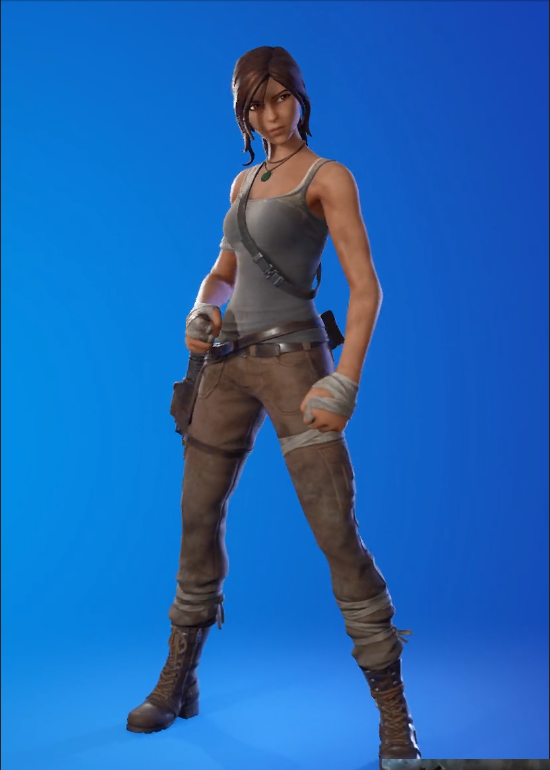
    Lara Croft

    alt="Screenshot of Lara Croft skin in Fortnite, Chapter 2 Season 6"

    Braided hair, a quiver on her back, and unmatched agility—Lara Croft is a fan-favorite adventurer. Introduced in Chapter 2, Season 6 (March 2021), she’s known for solving mysteries and dominating close combat. Her full skin set costs 2,200 V-Bucks, while the standalone version is 1,500. It includes outfit variations, glasses, a backpack, a spinning pickaxe, a blue-and-white rifle, and a jeep with dual tire options. Unlockable at Level 15.

    Fun Fact: Lara Croft originated in the 1996 Tomb Raider franchise and has starred in multiple films and games. Her legacy earned her a spot in Fortnite.

    With 69,544 players adding Lara Croft to their Fortnite Wishlist, she stands as one of the most sought-after crossover skins—blending nostalgia, action, and iconic style into a fan-favorite legacy.


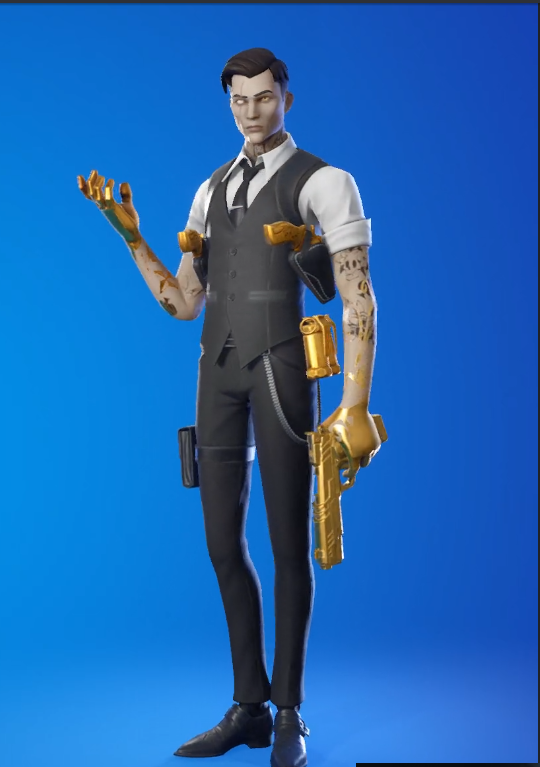
    Midas

    alt="Screenshot of Midas skin in Fortnite, glowing eyes and golden suit from Chapter 2 Season 2"

    When I first saw the Midas skin, it gave me goosebumps. He looked cold, creepy, and powerful—like something out of a scary story.

    Anyhow, this mysterious, dangerous, and cunning—Midas is a golden touch legend. Anything he touches turns to gold, including weapons and vehicles. His glowing eyes give him a ghostly vibe. Loved by fans of fantasy and mystery, Midas is part of the Golden Ghost set (2,500 V-Bucks) and unlocks at Level 100 in Chapter 2, Season 2.

    Why Players Still Love Midas?

    • Golden Touch: He turns weapons and items into gold—visually stunning and instantly iconic.
    • Deep Lore: Midas has a full storyline in Fortnite, from leading The Agency to triggering major events like The Device.
    • Multiple Styles: Players can unlock Ghost, Shadow, and Golden Agent versions, each with a unique vibe.
    • Cool Design: Mafia boss look, glowing eyes, sharp suit, and tattoos—he stands out in every match.
    • Fan Favorite: With over 50,000 players adding him to their Fortnite Wishlist, he remains one of the most desired and legendary skins in the game.

    Peely

    alt="Peely skin in Fortnite—bright yellow banana character with googly eyes, standing in-game during Chapter 1 Season 8"

    A bright yellow banana with googly eyes and human arms—Peely is Fortnite’s most attention-hungry character. He’s known for:

    • Jumping into volcanoes
    • Driving trucks in war zones
    • Volunteering to be kidnapped

    Introduced in Chapter 1, Season 8, Peely unlocks at Level 47. His humor and color-changing ability make him a fan favorite. Variants include Potassius Peels, Agent Peely, and Yellow Peely—but the original remains iconic. Price: 950 V-Bucks.

    As of 2025, over 44,000 players have added Peely to their Fortnite Wishlist, proving that this goofy banana skin remains one of the game’s most loved and iconic characters


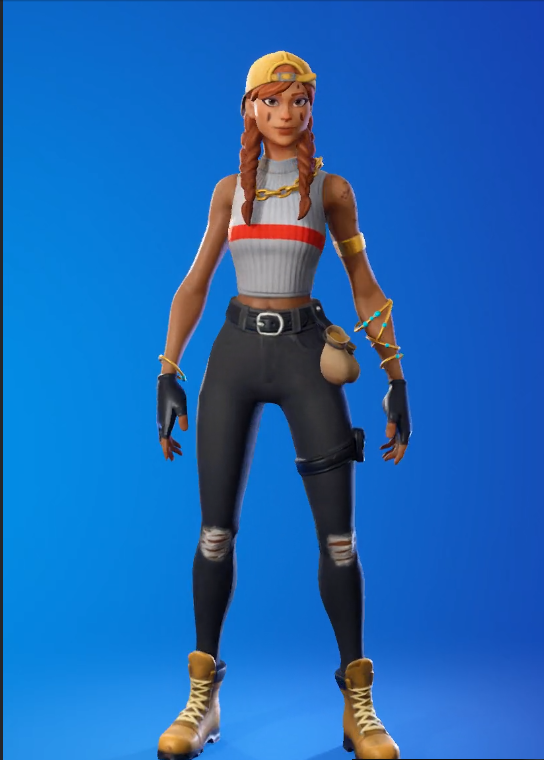
    Aura

    alt="Screenshot of Aura skin in Fortnite—wearing a yellow cap, twin braids, and gold chain, standing in-game from Season 8"

    Wearing a yellow cap, twin braids, and a chunky chain, Aura is always on the hunt for treasure. She’s one of the most-used skins due to her affordability and popularity among pro players. Introduced in Season 8 (2019), she’s part of the Treasure Hunter set and costs just 800 V-Bucks.

    With 41,612 players adding Aura to their Fortnite Wishlist, this stylish treasure-hunter remains one of the most popular uncommon skins—proving that simplicity, attitude, and a clean design still win fans season after season.


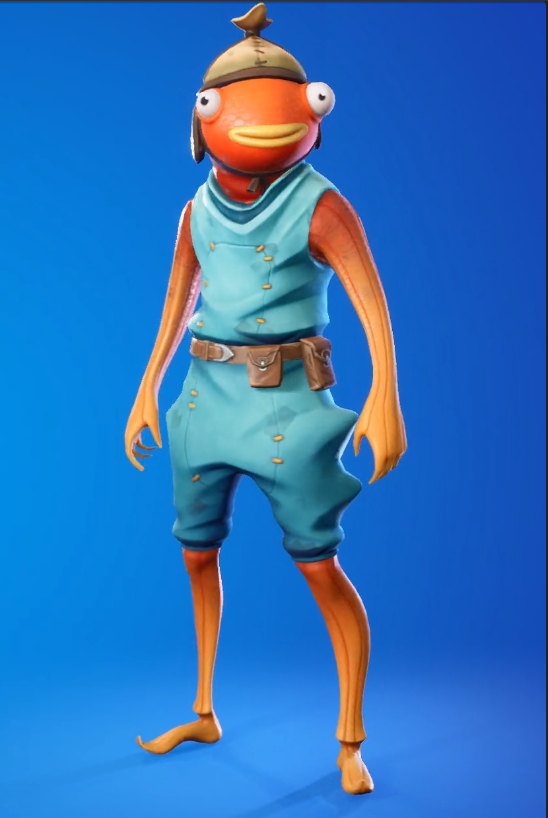
    Fishstick

    alt="Screenshot of Fishstick skin in Fortnite—wide-eyed fish character with orange scales and blue outfit, standing in-game from Season 7"

    A quirky, fish-like humanoid, Fishstick is beloved by kids and adults alike. Available for 1,200 V-Bucks, or as part of the Fish Food bundle for 2,200. First seen in Season 7, this skin is both weird and wonderful. Some players love his goofy look, others enjoy his in-game dialogue. Either way, he’s consistently ranked among Fortnite’s top skins.

    To some players, Fishstick might look bizarre, even downright ugly—but his fame hasn’t faded. So what makes this oddball skin a fan favorite? Let’s dive in.

    Why Ugly Works in Fortnite?

    In Fortnite, “ugly” isn’t a flaw—it’s a feature. Skins like Fishstick break the mold with goofy faces, clumsy animations, and meme-worthy charm. Players love them because they stand out, spark laughs, and flip the idea of what a hero should look like. With over 32,000 wishlists, Fishstick proves that being weird or even ugly can be a bold and popular style.

    Ending Words

    I personally like Aura. Why? Because she feels more human—warm, relatable, and gives off pleasant vibes right from the start. Sure, skins are just part of the gaming surface, but what truly matters is the mind behind the controller. No matter which skin you wear, it’s your strategy, speed, and moves that define how your in-game player performs. So, think smart—and naturally, you’ll look smart. That’s the real flex.

    More to Explore: Fortnite & Esports Stories You’ll Love

  • Esports: A gateway to Billion Dollar Industry

    Esports: A gateway to Billion Dollar Industry

    Once just a hobby in college dorms, gaming is now a gateway to global careers and academic success. Dr. Matt Knutson, now a professor and esports program director at the University of North Dakota, once asked his English professor if studying video games was even a “real” academic pursuit.

    Back then, gaming was seen as a distraction, not a discipline. But Knutson followed his passion, earned a doctorate focused on competitive gaming, and now teaches courses like esports media production and streaming strategy to students pursuing full-fledged esports degrees.

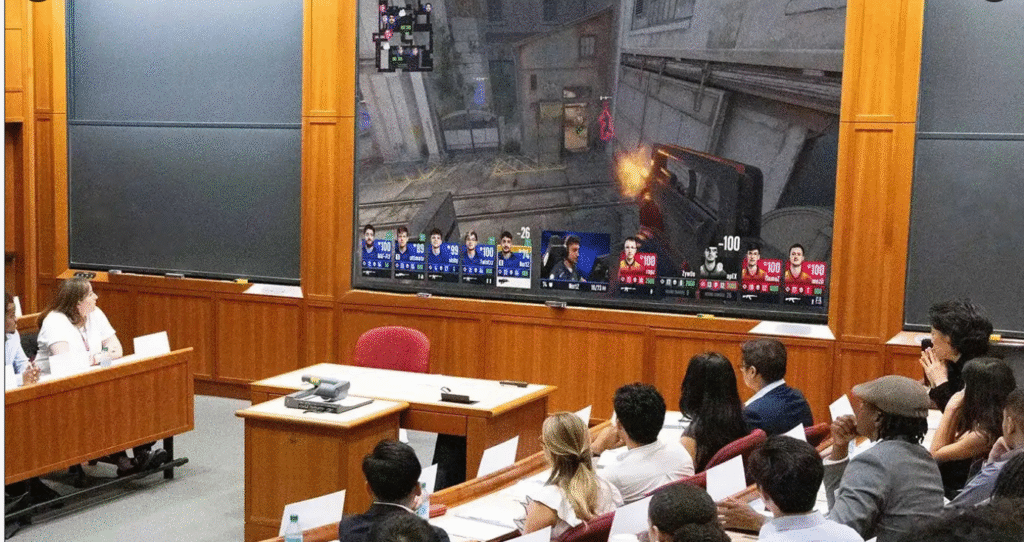
    His journey mirrors a global shift: esports are now becoming a profession, a curriculum, and a career path from a mere pastime. From UC Irvine’s pioneering esports scholarships to Ball State University’s esports broadcasting concentration, higher education is embracing the gaming revolution. According to the National Association of Collegiate Esports (NACE), over 300 schools across North America now have competitive esports programs, and more than 130 offer scholarships to support them.

    Even industry giants like Team Liquid are getting involved. During ESL Raleigh, they embarked on a road trip across college campuses, visiting student-run esports lounges and offering mentorship. “When you’re there, you’re a living resource,” said Joey Thimian, Team Liquid’s Director of Global Productions. “Students want to network, ask questions, and engage with someone who ‘made it’ in the industry.”

    So, now the trend is changing. Esports is being taught, funded, and celebrated in classrooms around the world.

    The Global Esports Boom: More Than Just a Game

    Esports have become a cultural and economic phenomenon. The global esports industry is expected to generate $1.79 billion in revenue by 2025; a 16.2% jump from 2024. Viewership is projected to surpass 640 million, with over 56% of fans tuning in via mobile devices, so, it’s no longer just about playing games, it’s about strategy, branding, coaching, broadcasting, and business. Major tournaments like The International (Dota 2), League of Legends World Championship, and Valorant Champions Tour offer prize pools that rival traditional sports. And behind every winning team is a network of analysts, marketers, developers, and managers; roles that require real-world skills and, increasingly, formal education.

    Study Esports: Degrees for Gaming Careers

    Recognizing the need for structured learning and professional development, universities across the globe have launched esports-focused degree programs. More than playing games they’re about understanding the ecosystem that powers them.

    Here are pioneering institutions offering Esports degrees:

    SchoolCityState/Province
    Becker CollegeWorcesterMassachusetts
    Shenandoah UniversityWinchesterVirginia
    Caldwell UniversityCaldwellNew Jersey
    Saint Peter’s UniversityJersey CityNew Jersey
    The Ohio State UniversityColumbusOhio
    Keuka CollegeKeuka ParkNew York
    University of California IrvineIrvineCalifornia
    George Mason UniversityFairfaxVirginia
    University of Texas at ArlingtonArlingtonTexas
    Lambton CollegeTorontoOntario
    Capitol Technology UniversityLaurelMaryland
    University of North DakotaGrand ForksNorth Dakota
    West Virginia UniversityMorgantownWest Virginia
    Full Sail UniversityWinter ParkFlorida

    These programs cover a wide range of disciplines:

    • Esports Business & Management: Learn how to run teams, organize tournaments, and monetize content.
    • Games Design & Development: Dive into the technical side—coding, level design, and user experience.
    • Esports Coaching & Performance: Train players, analyze gameplay, and optimize team dynamics.
    • Digital Media & Broadcasting: Master the art of streaming, commentary, and content creation.

    Some institutions, like the College of Esports in the UK, have gone all-in dedicating their entire academic mission to esports education. Their undergraduate offerings include degrees in International Esports Business, Games Art, Games Development, and Esports Coaching & Management.

    Careers in Esports: More Than Playing

    What makes esports degrees so exciting is their versatility. Graduates are equipped for careers in:

    • Marketing and brand partnerships
    • Event production and logistics
    • Game development and UX design
    • Sports psychology and coaching
    • Journalism and content creation

    And with the rise of platforms like Twitch, YouTube Gaming, and TikTok, the demand for skilled creators and strategists is skyrocketing. Esports is no longer a side hustle; it’s a full-fledged career path.

    Pakistan’s Esports Awakening: A Nation on the Rise

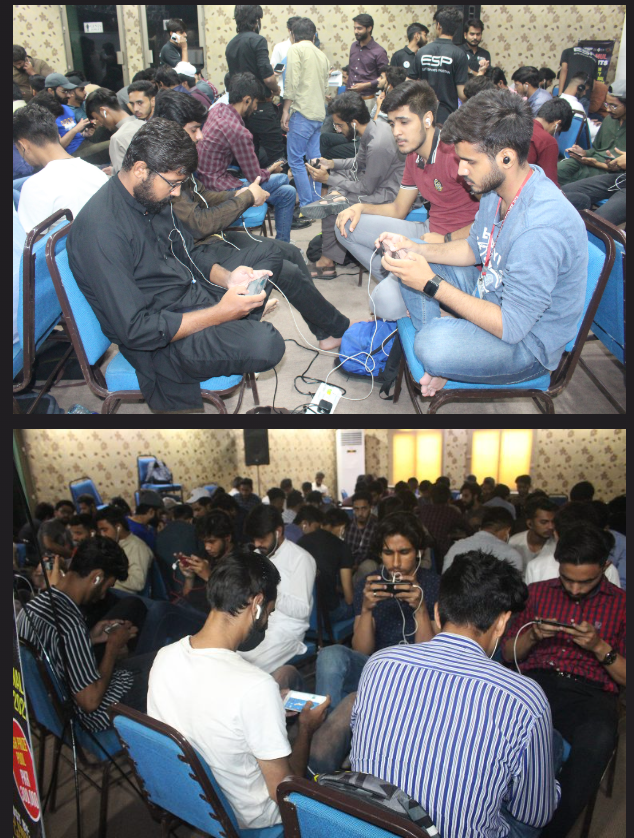
    While countries like the US, UK, and South Korea have long embraced esports, Pakistan is now stepping into the arena with bold ambition. Gamer Pakistan (GP) has emerged as a trailblazer, organizing over 30 esports competitions across the country. Their landmark events include:

    • University Esports National Tournament & Championship (2022)
    • National Esports Free Fire Championship (2022)
    • National Valorant League (2023)
    • Islamabad Esports Championship
    • Sindh Intervarsity PubG Tournament
    • KPK FIFA Championship
    • Lahore LAN Esports Championship
    • GP Pakistan Tekken Championship
    • Punjab Open Esports Championship

    These meet ups are structured, competitive, and professionally managed events that bring together students, gamers, and industry stakeholders.

    Backing this movement is Elite Sports Pakistan Pvt. Ltd (ESP), GP’s affiliate company. ESP has secured 119 agreements with universities and sports authorities across Pakistan, granting them exclusive rights to license, produce, and monetize inter-collegiate esports events. Their mission? To build a sustainable esports ecosystem that nurtures talent, fosters education, and drives economic growth.

    Esports: Pathways to the Future

    The growth of esports degrees and tournaments goes beyond entertainment. For younger generations, gaming has become more than just a hobby; it’s a way to connect, learn, and even build careers. By bringing esports into education and professional training, institutions are recognizing its role as a legitimate industry and preparing students for future opportunities.

    Pakistan’s entry into this space is both timely and promising. With a young, tech-savvy population and growing digital infrastructure, the country has the potential to become a regional esports powerhouse. Initiatives like Gamer Pakistan and ESP are laying the groundwork, but the journey has only just begun.

    Imagine a future where Pakistani universities offer esports degrees, where students learn game design alongside business strategy, and where local talent competes on global stages. We will definitely see this future.

    Final Thoughts: Game On, World

    Esports as a underdog to the main event, From Ivy League classrooms to bustling LAN arenas, the world is embracing it as a serious and sustainable career path. And as Pakistan joins the revolution, a new generation of gamers, creators, and innovators will surely prepare to press start on their futures.

    Whether you’re a player, a strategist, a designer, or a creator; esports is gaining recognition and support worldwide. This is only the beginning of its growth.

    For Similar Reads:

  • 3 Famous Games That Are Really Hard to Master

    3 Famous Games That Are Really Hard to Master


    StarCraft vs Rocket League vs Dota 2: Which Esports Game Is the Hardest to Master?

    Competitive gaming isn’t just about reflexes—it’s about strategy, mechanics, mental stamina, and adaptability. Among the most debated titles in esports, three games consistently rise to the top when players discuss difficulty: StarCraft, Rocket League, and Dota 2. But which one truly demands the most from its players?

    Let’s break it down.


    StarCraft: The Chess of Esports

    StarCraft is a fast-paced strategy game where you control powerful armies from three different alien groups: the human-like Terrans, the wild Zerg, and the advanced Protoss. Each group has its own style, strengths, and cool abilities.

    You build bases, gather resources, and command troops to defeat your enemies. Every decision matters—whether you’re planning a surprise attack or defending your territory. It’s all about thinking fast, making smart moves, and staying one step ahead.

    Why Players Say It’s Brutally Hard?

    StarCraft—especially Brood War and StarCraft II—is often described as “chess on steroids.” The game demands:

    • Multitasking at insane speeds (300+ APM at pro level)
    • Real-time strategy with zero downtime
    • Perfect macro and micro control
    • Split-second decision making under pressure

    On Reddit’s r/esports thread titled “Hardest esports game”, multiple users ranked StarCraft (Brood War and SC2) as the hardest due to its complexity and mechanical demands.

    Pro Insight

    Esports Veteran Serral has emphasized in interviews that maintaining top-level performance in StarCraft II demands intense mental discipline and daily practice routines.


    Rocket League: Fast Physics, Sharp Skills, Pure Control

    Rocket League is a super fun game where cars play soccer! You drive rocket-powered vehicles, zoom across the field, and try to hit a giant ball into the goal. It’s fast, exciting, and full of wild flips, jumps, and boosts.

    You can play alone or with friends, and every match feels like a mix of racing and sports. Whether you’re scoring goals or flying through the air to block a shot, Rocket League is all about skill, teamwork, and awesome action.

    Why It’s a Skill Ceiling Monster

    Rocket League looks simple: soccer with cars. But mastering it is anything but easy. Players must learn:

    • Aerial control using physics-based movement
    • Precise timing for shots, saves, and rotations
    • Team synergy with no verbal cues
    • Split-second reads on ball trajectory and opponent behavior

    In the same Reddit thread, players called Rocket League “the hardest to learn” due to its unique movement system and steep learning curve.

    According to IGN’s 5 Toughest Esports Games to Master, Rocket League is cited for having one of the highest mechanical skill ceilings in esports. By GIANTX pro players “Rocket League is a classic example of a game that’s easy to play, but incredibly tough to master.”


    Dota 2: Complexity Overload

    Dota 2 is a team-based strategy game where two sides—Radiant and Dire—battle to destroy each other’s base. Each player controls a powerful hero with unique abilities, and teamwork is key to winning.

    You choose your hero, fight enemies, earn gold, and buy items to grow stronger. The map is full of action, surprises, and smart plays. Every match is different, and small decisions can lead to big victories.

    It’s fast, deep, and full of epic moments—perfect for players who love strategy, skill, and working with a team.

    Why It’s Mentally Exhausting?

    Dota 2 is infamous for its overwhelming depth. With over 120 heroes, hundreds of items, and dozens of mechanics, players must:

    • Memorize vast amounts of game knowledge
    • Adapt to constantly changing metas
    • Master team coordination and timing
    • Handle psychological pressure in long matches

    GIANTX’s esports pros told IGN that Dota 2 “can feel impenetrable to newcomers” and requires “unprecedented game knowledge” to succeed.

    In DualShockers’ Top 10 Hardest Esports Games to Achieve Top Rank, Dota 2 is listed as one of the most brutal ranking systems, with only a tiny fraction of players ever reaching Immortal rank.

    Comparison

    FeatureStarCraftRocket LeagueDota 2
    Game TypeReal-Time Strategy (RTS)Physics-Based SportsMultiplayer Online Battle Arena (MOBA)
    Gameplay FormatSoloTeam (3v3)Team (5v5)
    Skill CeilingExtremely HighExtremely HighExtremely High
    Learning CurveSteepSteepVery Steep
    Mental LoadHigh multitaskingHigh mechanical focusHigh strategic complexity
    Pro Player BurnoutCommonModerateVery Common

    Final Thoughts: Which Game Wins the “Hardest” Title?

    There’s no universal answer—but here’s how they stack up:

    • StarCraft wins for solo mental load and multitasking
    • Rocket League dominates in mechanical precision
    • Dota 2 overwhelms with strategic depth and team coordination

    But when the dust settles and the skill ceiling stretches beyond sight, Dota 2 claims the “hardest” crown. It’s not just about knowing the game—it’s about knowing every hero, every item, every counter, and every teammate’s next move before they make it. The pressure is constant, the learning curve unforgiving, and the margin for error razor-thin.

    StarCraft tests your mind. Rocket League tests your reflexes. Dota 2 tests everything.

    For players chasing mastery, these games aren’t just competitive—they’re transformative. They demand more than talent. They demand obsession, resilience, and the will to improve when improvement feels impossible.

    So, whether you’re grinding solo, flying across the pitch, or coordinating chaos in the jungle—welcome to the top tier. The hardest games are waiting!

    Honorable Mention:

    Fortnite, Valorant and CS 2 are also the toughest games to master according to different perceptions of players in various gamings talks and discussions platforms.

    For Similar Reads:

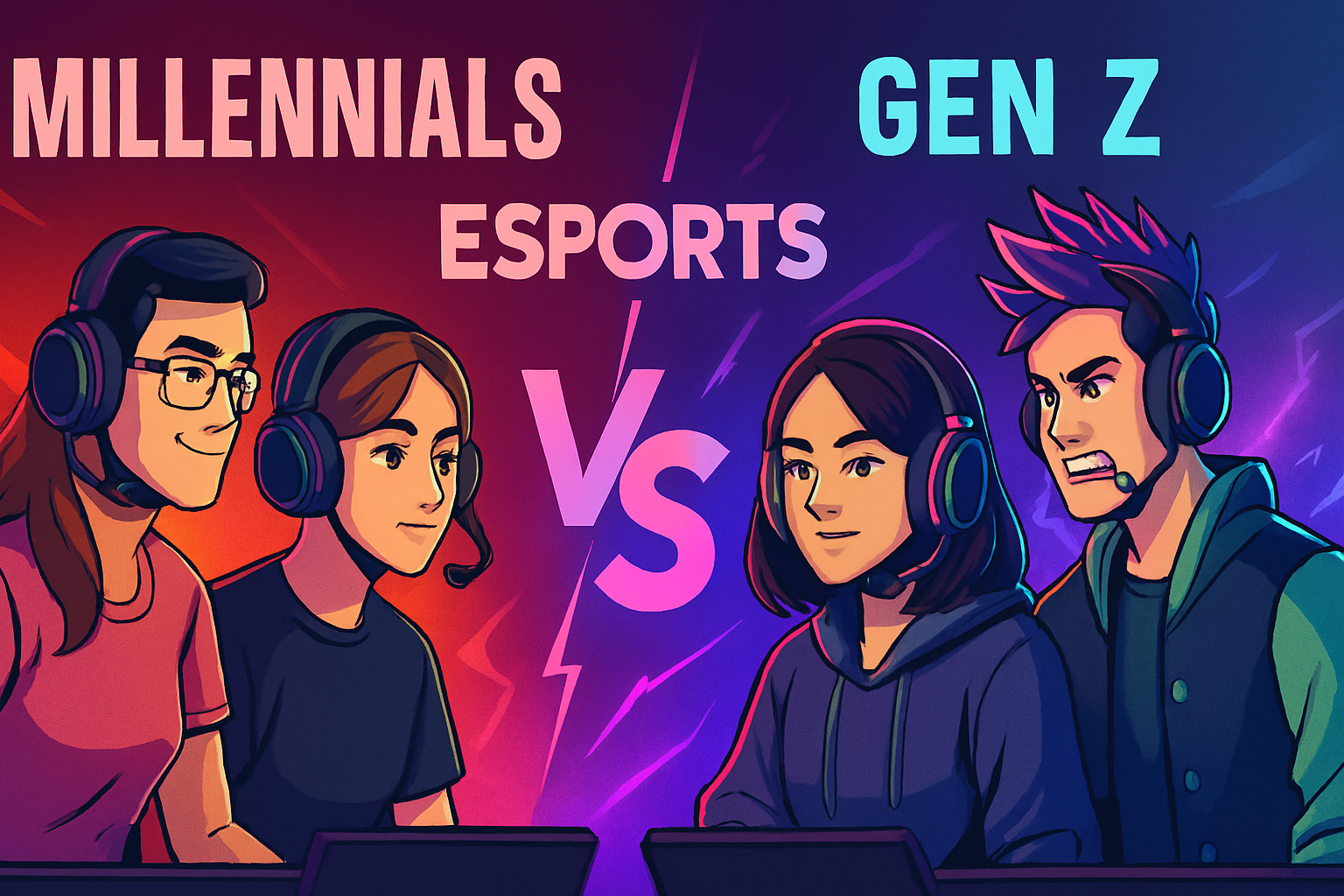
  • Who Plays It Better? Gen Z or Millennials

    Who Plays It Better? Gen Z or Millennials

    When it comes to online gaming, two generations dominate the digital battlefield: Gen Z and Millennials. Both have grown up with controllers in hand, but their styles, preferences, and prowess in the gaming world are anything but identical. So, who’s more active? Who’s more skilled? And who’s racking up the most wins? Let’s dive into this generational showdown and find out who truly deserves the crown.

    The Players: Who’s Logging in More?

    Let’s start with the basics—who’s actually playing more?

    • Gen Z (born 1997–2012) is the mobile-first generation. They’ve never known a world without smartphones, high-speed internet, or Twitch streams. According to Newzoo, 81% of Gen Z reported playing video games in the past six months, spending an average of 7 hours and 20 minutes per week gaming.
    • Millennials (born 1981–1996), on the other hand, are the OGs of online gaming. They were there when LAN parties were a thing and when World of Warcraft ruled the world. Surprisingly, Millennials still make up the largest percentage of active gamers today.

    So while Gen Z might be more tech-savvy and socially engaged, Millennials are still clocking in more hours overall. Advantage: Millennials.

    Gaming Styles: Fast-Paced vs Immersive

    Gen Z’s gaming style is all about speed, social interaction, and community. They gravitate toward multiplayer games like Fortnite, Valorant, and PUBG, where quick reflexes and team coordination are key. They’re also more likely to watch gaming streams, engage with content creators, and participate in gaming communities.

    Millennials, however, lean toward immersive single-player experiences. Think Skyrim, GTA, and World of Warcraft. They prefer games with rich narratives and expansive worlds, often investing in expansion packs and gear to enhance their gameplay.

    In short:

    • Gen Z = fast, social, mobile
    • Millennials = deep, strategic, immersive

    Who’s Winning More?

    Now, let’s talk skill. Who’s actually better at gaming?

    This is where things get spicy. Gen Z might not play as frequently as Millennials (only 48% play daily vs 56% of Millennials), but when they do, they go hard—29% of Gen Z play more than 4 hours a day, compared to 23% of Millennials.

    Gen Z also learns differently. They watch streams, study gameplay, and pick up strategies from influencers. They’re more likely to engage in competitive online games and adapt quickly to new mechanics.

    Millennials, meanwhile, rely on experience. They’ve been gaming longer, and many have honed their skills over decades. They may not be as fast, but they’re often more strategic and consistent.

    So who’s winning more? It depends on the game:

    • In fast-paced shooters and battle royales, Gen Z has the edge.
    • In strategy-heavy RPGs and MMOs, Millennials dominate.

    Spending Power: Who’s Investing More?

    Gaming isn’t just about play—it’s also about pay.

    • Millennials are more likely to spend money on games. 48% make in-app purchases, and 50% spend more than $10 per month.
    • Gen Z is more cautious with their wallets. Only 41% make in-app purchases, and just 35% spend over $10 monthly.

    Millennials also tend to invest in game expansions and gear, while Gen Z prefers buying playable characters and cosmetic items.

    So when it comes to supporting the industry financially, Millennials are the MVPs.

    Platform Wars: Console vs Mobile

    Another key difference? The platforms they prefer.

    • Gen Z is mobile-first. 77% prefer gaming on mobile devices, and they’re more likely to play on-the-go.
    • Millennials are more platform-agnostic, playing across PC, console, and mobile—but they still have a soft spot for traditional setups.

    Interestingly, Gen Z males lean toward console games and action/fighter genres, while Gen Z females prefer casual mobile games like Match 3 and puzzles.

    Mindset Matters: Why They Game

    The motivations behind gaming also differ.

    • Gen Z plays to relax, socialize, and escape stress. They see gaming as part of their identity and social life.
    • Millennials play for challenge and immersion. They value gameplay depth and storylines more than social features.

    This difference shapes how each generation approaches gaming—and how they define success.

    Absolutely—let’s round it out with a compelling eighth difference:

    Content Creation vs Content Consumption

    • Gen Z is the creator generation. They’re not just watching gameplay—they’re streaming it, clipping highlights, making memes, and building entire personas around gaming. Platforms like TikTok, Twitch, and YouTube Shorts are their playgrounds for sharing bite-sized, viral gaming moments. Many aspire to be influencers or esports stars, and they treat gaming as a launchpad for digital fame.
    • Millennials, on the other hand, are more likely to be content consumers. They enjoy long-form Let’s Plays, deep-dive reviews, and community forums. While some do stream or create, they generally engage with content to learn, relax, or connect with nostalgia—less about going viral, more about meaningful engagement.

    This difference reflects a broader generational shift: Gen Z sees gaming as a stage, while Millennials see it as a sanctuary.

    Verdict: Who’s the Real Gaming Champion?

    So, who wins the generational gaming war?

    • Most active? Millennials.
    • Most socially engaged? Gen Z.
    • Most skilled? It’s a tie—depends on the genre.
    • Most financially invested? Millennials.
    • Most future-ready? Gen Z.

    In the end, it’s not about who’s better—it’s about how each generation is redefining gaming in their own way. Gen Z is pushing the boundaries of social gaming, streaming, and mobile play. Millennials are keeping the flame alive for immersive storytelling and strategic depth.

    Together, they’re shaping the future of online gaming—and it’s looking epic.

    For More Similar Read: 👇

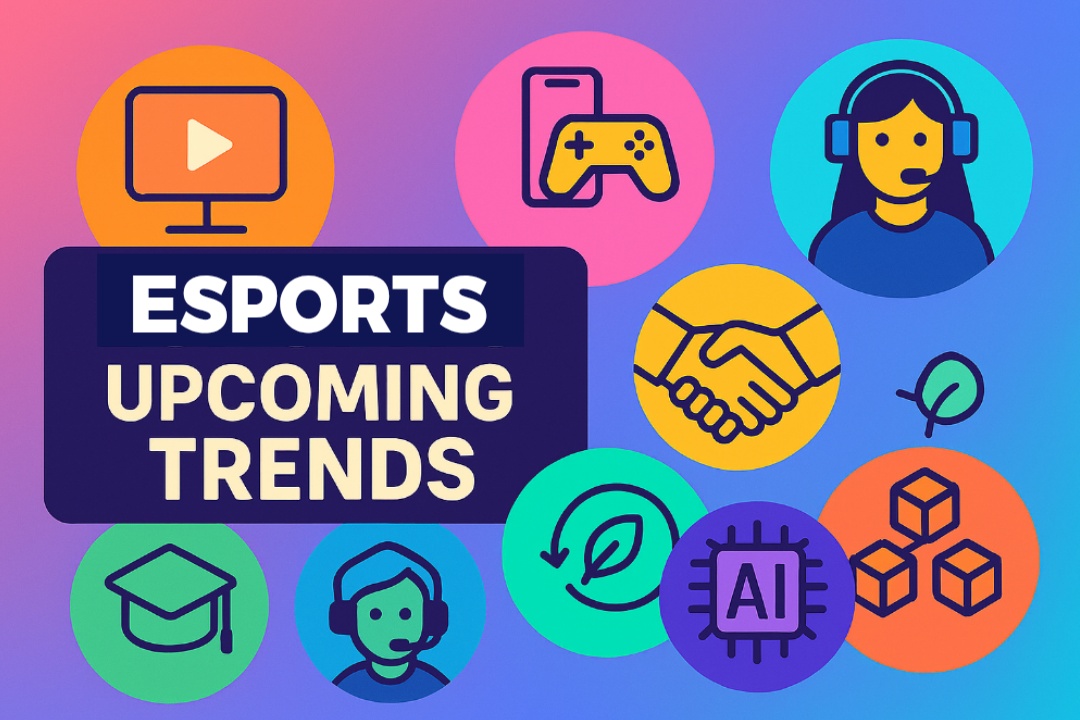
  • 8 Game-Changing Esports Trends You Need to Know

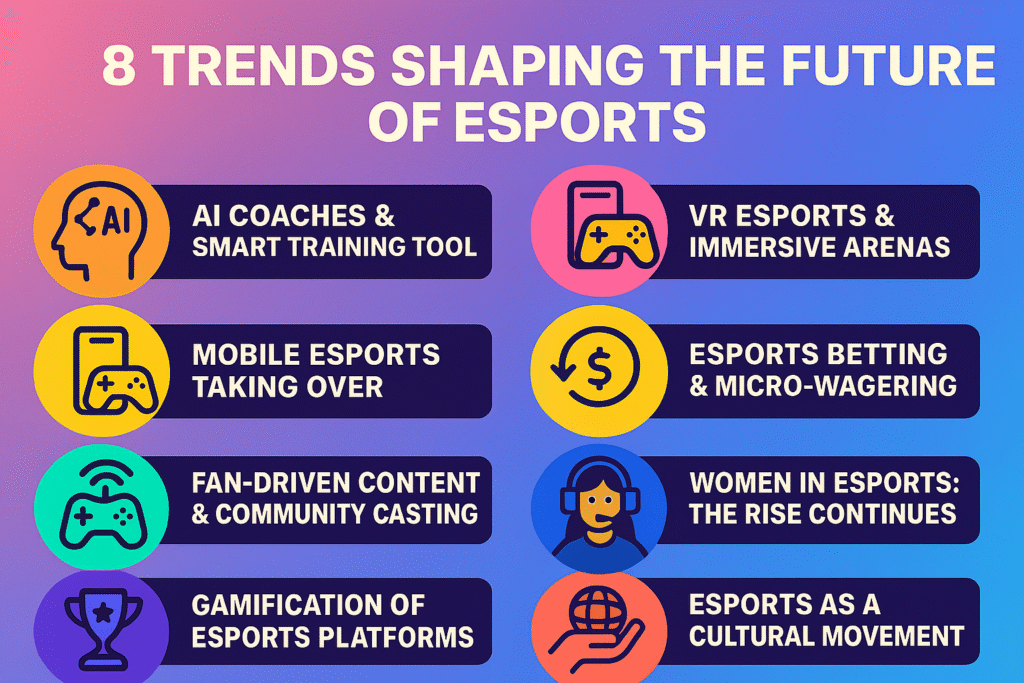
    8 Game-Changing Esports Trends You Need to Know

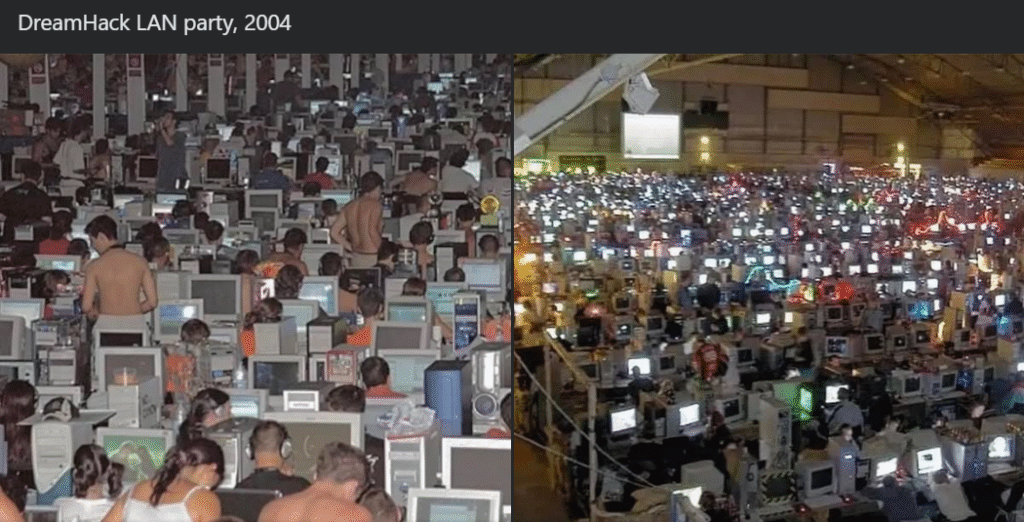
    Esports isn’t just evolving, it is actually rewriting the entire rulebook of entertainment, tech, and culture. What started as LAN parties and pixelated bragging rights has exploded into a billion-dollar global phenomenon. And if you think we’ve peaked, think again. The next decade is going to be wild.

    Massive LAN party at DreamHack 2004 showing rows of gamers at desktop computers in a packed indoor venue, highlighting early esports culture and community gaming.

    Here are eight esports trends that are already reshaping the game and will keep doing so for years to come.


    1. AI Coaches & Smart Training Tools

    Let’s be real, pro gamers are like digital athletes. They grind hard, need solid game sense, and smart plays. That’s where AI steps in.

    Now we’ve got bots that watch your gameplay, call out your weak spots, and even say stuff like, “Yo, don’t peek that corner, you’ll get wrecked.” It’s wild.

    These AI tools help you aim better, think faster, and play smarter. Some even build fake enemies just to mess with your bad habits. Harsh? Yep. But it works.

    If you wanna level up, AI’s your new coach. No cap.


    2. VR Esports & Immersive Arenas

    Virtual reality is no longer just for Beat Saber and tech demos. It’s creeping into competitive gaming, and it’s got serious potential.

    VR esports are still in their infancy, but titles like Echo Arena and Blaston are proving that full-body gameplay can be just as intense and way more immersive than keyboard and mouse. As hardware gets cheaper and more portable, expect VR tournaments to become a staple.

    And for spectators? Think virtual stadiums where you can walk around, choose your camera angle, and even interact with other fans. It’s like Twitch meets the Metaverse.


    8 trends of esports infographics

    3. Mobile Esports Taking Over

    If you’re still sleeping on mobile esports, wake up. Games like PUBG Mobile, Free Fire, and Mobile Legends are dominating viewership and prize pools, especially in regions like Southeast Asia, Latin America, and the Middle East.

    Why? Accessibility. Not everyone has a gaming PC, but almost everyone has a smartphone. Mobile esports have revolutionized competitive gaming by making it more accessible to everyone and the skill ceiling is impressively high.

    Expect more publishers to optimize their games for mobile, and more tournaments to go mobile-first. The future isn’t just portable, it’s pocket-sized.


    4. Esports Betting & Micro-Wagering

    This one’s a bit controversial, but it’s growing fast. Esports betting is becoming a massive industry, with fans placing wagers on match outcomes, player stats, and even in-game events like “first blood” or “next kill.”

    Micro-wagering, betting on tiny moments in real time is especially hot. It adds a layer of excitement for viewers and opens up new revenue streams for platforms.

    Of course, regulation is key. But if done right, esports betting could become as mainstream as fantasy football or March Madness brackets.


    5. Fan-Driven Content & Community Casting

    Gone are the days when only official broadcasters had the mic. Now, fans are the commentators, analysts, and entertainers.

    Community casting is blowing up, with streamers and creators offering their own takes on matches, player drama, and game updates. Platforms like YouTube and Twitch are rewarding these creators with monetization tools, sponsorships, and visibility.

    In the next decade, expect fan-driven content to rival traditional broadcasts and maybe even replace them. The power is shifting to the people.


    6. Gamification of Esports Platforms

    Do you know about gamification? Whether you’re an esports player or an avid fan, gamification is made for you.

    Let me explain! Gamification means making something feel like a game, even if it’s not. Esports platforms are using this idea to make watching and following esports more fun and interactive.

    Instead of just sitting and watching matches, fans can now earn points, unlock rewards, and climb leaderboards by doing things like predicting who will win, watching games live, or joining challenges. It’s kind of like turning the whole experience into a mini-game for the fans. This keeps people excited and coming back, because they feel more involved and rewarded for their time. Think of it like fantasy sports or a battle pass but for esports viewing.

    That’s the idea behind gamification. Esports platforms are adding missions, leaderboards, and loyalty rewards to keep fans engaged. Watch a match, earn points. Predict a winner, unlock skins. It’s like fantasy sports meet battle pass.

    This trend is all about turning passive viewers into active participants. And it’s working.


    7. Women in Esports: The Rise Continues

    Let’s be real, esports has had a gender gap. But that’s changing fast.

    More women are competing, streaming, and leading in esports than ever before. In Brazil, female participation jumped from 15% to 25% in just a few years. Tournaments like Valorant Game Changers and Girl Gamer Festival are spotlighting female talent and breaking stereotypes.

    Brands are also stepping up, sponsoring women-led teams and creating inclusive campaigns. The next decade will be about equity, representation, and rewriting the narrative.


    8. Esports as a Cultural Movement

    Esports is more than just gaming; it’s starting to shape things like fashion and education too.

    Streetwear brands are collaborating with teams. Universities are offering esports scholarships. Even the Olympics are flirting with the idea of including esports as a medal event.

    In places like Saudi Arabia and South Korea, esports is part of national strategy. It’s not just entertainment, its identity, economy, and innovation rolled into one.


    Final Thoughts: The Game Has Just Begun

    Esports is growing faster than any other entertainment medium. It’s not just about who wins the match, it’s also about who shapes the future. Whether you’re a player, fan, creator, or investor, now’s the time to get involved.

    Because in the next decade, esports won’t just be a trend, it’ll be the culture.

    For Similar Read:

  • Women gamer’s Contribution in the Esports World

    Women gamer’s Contribution in the Esports World

    Why do we hardly know women’s names in esports rosters? Is it because women have little interest in competitive gaming, or are they simply not being acknowledged?

    Discover how female gamers are transforming esports, explore global teams, top streamers, tournament wins, and the future of women in competitive gaming in this article.

    The Rise of Women in Esports

    Women are definitely showing up on the esports world stage, but their numbers are still far too low. Even so, let me highlight a few names who are making waves and changing the tide.

    StarCraft is a notoriously tough game, not everyone can lay a finger on it, and you know when women choose a path it is not easy one at all. As a teenager growing up in Kingston, Ontario, Sasha Hostyn began her journey into competitive StarCraft II, eventually becoming one of the most accomplished women in esports.

    By 2018, Sasha, now known globally as “Scarlett,” would make history by winning IEM PyeongChang against South Korean pro- Kim “sOs” Yoo Jin, becoming the first woman to claim a major title in one of esports’ most demanding strategy games.

    Scarlett’s victory proves that whether it’s tackling everyday challenges or mastering one of the toughest games in the world, gender is not a barrier. With critical thinking, sharp skills, and unwavering determination, anyone can rise to the top.

    Victory is for Anyone who is BEST

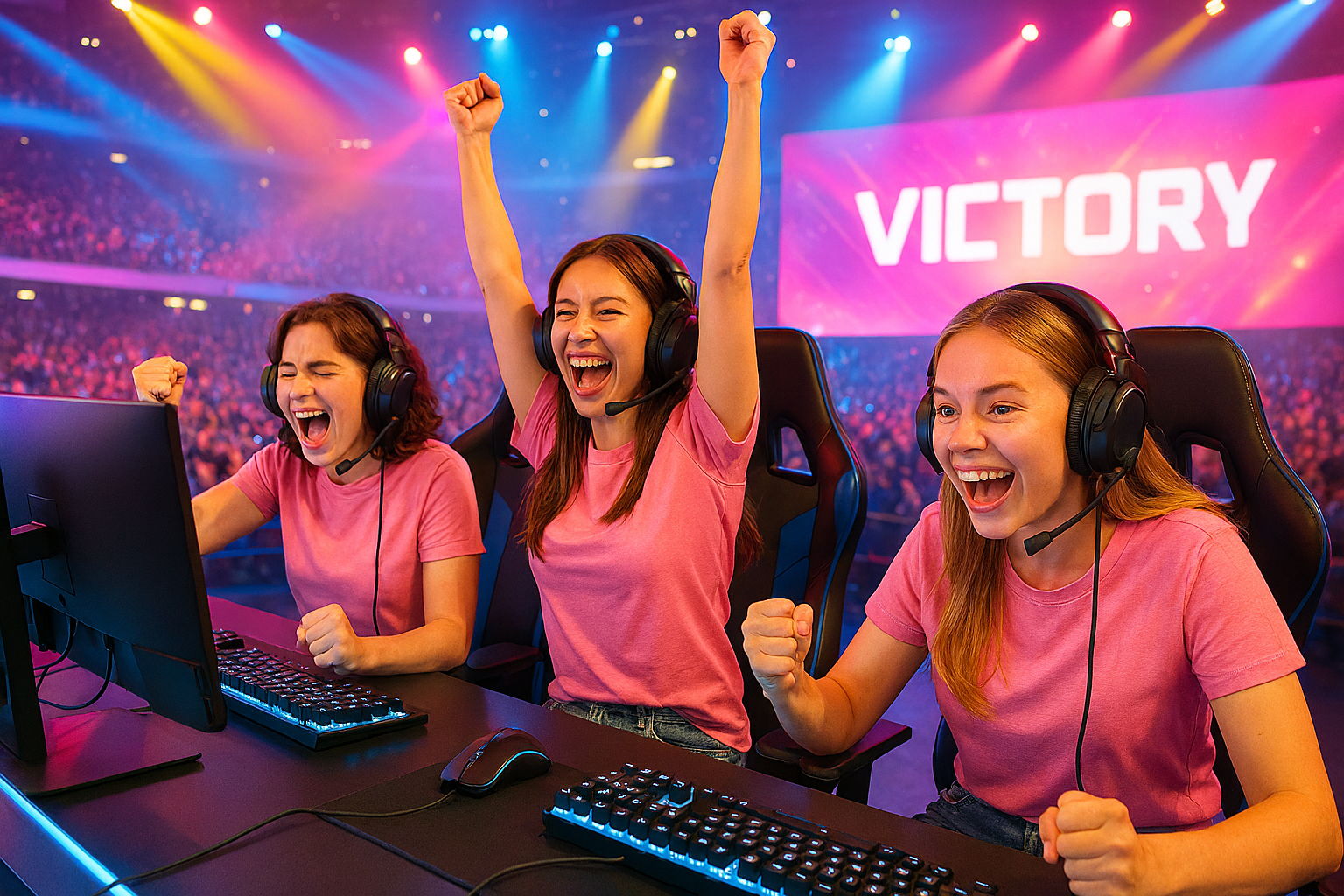
    Girls earn accolades when they prove themselves among the best. The Terror Queens of Myanmar secured 3rd place at the Esports World Cup 2025 in Mobile Legends: Bang Bang, taking home a $50,000 prize and capturing attention from around the world.

    In France, Team Vitality’s female squad swept the finals 4–0, taking home $150,000 and proving that European women can compete at the very highest level.

    These weren’t isolated stories. From LATAM’s DreamMax Girls to WAOW GG Esports from Africa, slowly but steadily they will definitely reach the top.


    Skill Over Stereotypes

    copilot 20250912 104513

    Despite making up 46% of the global gaming population, women represent only 8% of professional esports players. The gap isn’t due to lack of talent, it’s systemic. Many female players face harassment, underrepresentation, and limited access to sponsorships. Yet they persist.

    In VALORANT, players like Melanie “meL” Capone and Alexis “alexis” Guarrasi have each made over $130,000 by leading their teams in tough Game Changers tournaments. Their success shows that tactical shooter games aren’t just for guys, these women are proving they can compete also.

    Streaming as a Stage

    While some women battle in tournaments, others build empires on platforms like Twitch. Pokimane, with over 9 million followers, has become one of the most recognizable faces in gaming. Her streams blend gameplay, commentary, and community, showing that influence in esports isn’t limited to the scoreboard.

    Others like Loeya, KittyPlays, and AriGameplays have carved out niches in Fortnite, PUBG, and GTA V, attracting millions of fans and lucrative sponsorships. These women are entrepreneurs, entertainers, and cultural icons all at the same time.

    The EWC 2025: A Turning Point

    The Mobile Legends: Bang Bang Women’s Invitational at EWC 2025 was a classic tournament. With 16 teams from regions including Türkiye, Mongolia, China, and Africa, it showcased the global reach of female esports.

    Team NameCountry/RegionPlacementPrize Won
    Team VitalityFrance 🇫🇷1st Place$150,000
    Gaimin GladiatorsUSA 🇺🇸2nd Place$90,000
    Terror QueensMyanmar 🇲🇲3rd Place$50,000
    WAOW GG EsportsAfrica Top 16$10,000

    For many of these players, it was their first time playing on a big international stage. For the fans watching, it felt like a sneak peek into the future of esports.

    Sponsors Are Watching

    Many sponsors are getting involved in women’s esports and it’s not just to be seen. Female teams bring loyal fans, new audiences and real stories that people connect with. These players stand for things that matter strength, creativity, and determination. That’s exactly the kind of energy brands want to support.

    What Comes Next

    The path forward needs more advancement. Mixed-gender competitions, better funding, and safer online spaces are essential. Initiatives like VCT Game Changers, ESL Impact, and the GirlGamer Festival are laying the groundwork.

    And as more girls see players like Scarlett, Liooon, and the Terror Queens succeed, they’ll know that esports is a career for them also.

    Conclusion: Pioneers in Esports

    These women aren’t just showing up, they’re actually setting new standards. From Scarlett’s strategic dominance in StarCraft to Team Vitality’s clean sweep in the finals, their performances speak for themselves: they’ve earned their place.

    The conversation isn’t about whether women can compete with men, they’ve already proven that. The real challenge is whether the industry and its audiences are ready to recognize and support them fully.

    For Similar Read:

  • Is It Just a Game? The Truth Behind Esports Obsession

    Is It Just a Game? The Truth Behind Esports Obsession

    “Is it just a game?”
    That’s the question 17-year-old Ali was asked by his parents when they found him playing Valorant at 3 a.m. again. But for Ali—and thousands of esports players like him—it’s not just a game. It’s a career, a passion, and a battlefield of challenges that most outsiders don’t see.

    Welcome to the world of esports, where the stakes are high, the competition fierce, and the pressure relentless. Behind the flashing screens and roaring crowds lies a reality that’s far more complex than most imagine.


    The LAG That Kills Dreams

    Let’s start with something every gamer dreads: lag. Imagine you’re in the final round of a tournament, your team is counting on you, and just as you’re about to make the winning move—your screen freezes. That split-second delay caused by poor internet or server issues can cost players thousands of dollars, sponsorships, and even their reputation.

    For professional esports players, lag isn’t just annoying—it’s a career hazard. Many invest in high-end gear and premium internet plans, but even then, technical glitches can strike at the worst moments.


    Foul Language & Toxicity

    Esports matches are intense. But with intensity often comes toxicity. Players are frequently exposed to foul language, insults, and even threats during matches—especially in online ranked games. While some develop thick skin, others internalize the negativity, which can affect their confidence and mental health.

    Toxic environments also discourage newcomers and can lead to burnout. Many teams now hire psychologists or moderators to help manage team dynamics and online interactions.


    Mental Health: The Silent Opponent

    Esports players face immense psychological pressure. The need to perform consistently, maintain rankings, and meet expectations can lead to anxiety, depression, and burnout. Unlike traditional sports, esports lack structured mental health support in many regions.

    Players often isolate themselves to practice for hours, sacrificing sleep and social interaction. Over time, this isolation can lead to emotional instability and loneliness.


    Eyes on the Prize—But at What Cost?

    Staring at screens for 8–12 hours a day takes a toll. Eye strain, dry eyes, and blurred vision are common among esports athletes. Some report headaches and difficulty focusing on real-world tasks after long gaming sessions.

    Blue light glasses and screen breaks help, but the damage accumulates. Long-term exposure can even lead to deteriorating eyesight, especially in younger players who start training early.


    Parents: The First Boss Level

    Many esports players face parental restrictions. In cultures where academic success is prioritized, gaming is often seen as a distraction or waste of time. Players hide their practice schedules, sneak in matches late at night, and struggle to convince their families that esports is a legitimate career.

    This lack of support can be emotionally draining. Some players give up their dreams entirely due to family pressure, while others push forward in secrecy, adding another layer of stress.


    Muscle Fatigue & Physical Strain

    Esports may not involve running or jumping, but it’s physically demanding. Long hours of sitting and repetitive hand movements lead to wrist pain, backaches, and even carpal tunnel syndrome. Without proper posture and regular exercise, players risk long-term damage to their bodies.

    Some teams now include physiotherapists and fitness routines in their training programs, but many solo players lack access to such resources.


    Addiction & Obsession

    There’s a fine line between dedication and addiction. Esports players often become obsessed with improving their skills, climbing ranks, and staying ahead of the competition. This obsession can lead to unhealthy habits—skipping meals, avoiding sleep, and neglecting relationships.

    Game addiction also affects emotional regulation. Players may become irritable, impulsive, or overly competitive, even outside the gaming world.


    Studies & Social Life: The Forgotten Realms

    Balancing esports with education and social activities is a major challenge. Players often skip classes, miss assignments, or drop out entirely to focus on gaming. While some succeed, many struggle to return to academics if their esports career doesn’t pan out.

    Social life also takes a hit. Friends drift away, relationships suffer, and players find themselves disconnected from the world beyond their screens.


    Behavioral Shifts & Personality Changes

    Constant exposure to competitive environments, toxic chats, and high-pressure situations can lead to behavioral changes. Players may become more aggressive, impatient, or emotionally volatile. Some develop a superiority complex, while others withdraw completely.

    These shifts affect not just the player, but their families, friends, and teammates. Recognizing and addressing these changes early is crucial for long-term well-being.


    So, What’s the Solution?

    Esports is here to stay—and it’s growing fast. But to ensure players thrive, not just survive, we need:

    • Mental health support: Regular counseling and emotional check-ins.
    • Parental education: Helping families understand the esports ecosystem.
    • Physical wellness programs: Including posture training, exercise, and breaks.
    • Academic flexibility: Schools and colleges offering hybrid models for esports athletes.
    • Community building: Safe spaces for players to connect, share, and grow.

    Ali’s story isn’t unique. It’s the story of thousands chasing their dreams in a digital arena filled with both glory and grit. So next time someone says, “It’s just a game,” maybe ask them to play a round under pressure, with lag, a sore wrist, and a crowd watching.

    They might just change their mind.

  • Why PUBG Mobile, Free Fire & COD Mobile Were Banned in These Countries?

    Why PUBG Mobile, Free Fire & COD Mobile Were Banned in These Countries?

    Mobile games like PUBG Mobile, Call of Duty: Mobile, and Free Fire have been banned in multiple countries—not just for gameplay, but for deeper issues like addiction, data privacy, and national security. In this article, we explore why these global hits faced sudden bans and what it means for gamers worldwide.

    In July 2020, the Pakistan Telecommunication Authority (PTA) suspended PUBG after receiving complaints that it was addictive, a waste of time, and harmful to the mental and physical health of young players. The ban was also linked to tragic incidents, including suicides reportedly connected to excessive gameplay.

    Not just Pakistan, many countries around the globe put a ban on these games for multiple issues. we will talk particularly about PUBG Mobile, Call of DUTY: Mobile and Free Fire.

    Mobile games like PUBG Mobile, Call of Duty: Mobile, and Free Fire weren’t just global sensations—they were cultural phenomena. But despite their massive fanbases, these titles faced sudden bans in multiple countries. Why? It wasn’t just about gameplay. From national security concerns to data privacy scandals, and even loot box controversies, governments pulled the plug in ways that left players stunned.

    online games banned

    Countries That Banned These Mobile Games

    India

    India has banned PUBG Mobile and Free Fire in 2020 and 2022 respectively. But Let COD stay in the market.

    Pakistan

    Pakistan has banned PUBG in 2020 Temporarily and lifted it later. it’s in the market now and its first PUBG Mobile team has reached EWC and secured 7th position overall. Free Fire is being criticized for creating mental health issues but not banned at all.

    China

    when PUBG came into the market, China has banned it immediately for violating National values of the country then after measuring the potential of China’s market, makers replaced the game with modifying the version into “Game for Peace” and that’s it. Game is now not officially banned and have a powerhouse in China.

    Iraq

    Iraq banned PUBG in 2019 and lifted in 2024.

    Belgium

    Call of Duty is banned in Belgium and PUBG faced restrictions regarding loot box also.

    let’s talk about every game one by one:

    1. PUBG Mobile — Data, Violence, and Addiction Concerns

    Key Ban Triggers:

    • Data Privacy & National Security: In countries like India, PUBG Mobile was banned over concerns that user data could be accessed by foreign entities due to its links with Tencent.
    • Youth Addiction & Mental Health: Reports of excessive playtime, poor academic performance, and even tragic incidents linked to compulsive gaming fueled public pressure.
    • Violence & Cultural Sensitivity: Critics argued the game promoted aggressive behavior, prompting some governments to impose restrictions or “health reminders.”
    • Loot-Box & Gambling Laws: Its crate and lucky-draw systems were scrutinized under gambling regulations in certain regions.

    2. Call of Duty: Mobile — Cheating, Spoofing, and Policy Violations

    • Key Ban Triggers:
    • Cheating & Third-Party Tools: Use of aimbots, wallhacks, and unauthorized overlays led to permanent bans.
    • VPN & Location Spoofing: Some players used VPNs to access easier “bot lobbies” or bypass regional restrictions, which Activision treats as a spoofing violation.
    • Unauthorized Purchases: Buying in-game currency or items from unofficial channels can trigger account suspensions.
    • Fair Play Enforcement: Activision maintains a zero-tolerance policy, applying penalties regardless of who was playing on the account at the time.

    3. Free Fire — Anti-Hack Enforcement and Data Security Scrutiny

    • Key Ban Triggers:
    • Hacks & Modified Clients: Garena enforces a strict zero-tolerance policy against cheats like wallhacks, speed hacks, and aim assists.
    • Unauthorized Tools & Exploits: Using non-official programs, exploiting glitches, or bypassing anti-hack systems results in permanent bans.
    • Mass Reports & Abnormal Gameplay: Accounts flagged by multiple players and detected for suspicious activity are often suspended.
    • Data Privacy & National Security: In India’s 2022 ban, Free Fire was among apps flagged for potential data risks due to foreign ties.

    What These Bans Really Mean for the Gaming World?

    The bans on PUBG Mobile, Call of Duty: Mobile, and Free Fire weren’t just about blocking access to games—they were a wake-up call. Governments, parents, and educators began to realize that mobile games weren’t just digital distractions. They were immersive worlds that could shape behavior, influence emotions, and even impact national security.

    For players, these bans sparked frustration and confusion. Many felt punished for the actions of a few, while others began to reflect on their own gaming habits. For developers, it was a signal to rethink how games are built, marketed, and regulated. Suddenly, terms like “data sovereignty,” “loot box ethics,” and “digital addiction” became part of everyday conversations.

    And yet, despite the bans, these games continue to evolve. PUBG returned to India as BGMI (Battlegrounds Mobile India) with modified servers and policies. Free Fire launched Free Fire MAX, aiming to rebuild trust. Call of Duty: Mobile remains active in most regions but faces ongoing scrutiny over fair play and monetization.

    A Global Shift in Gaming Awareness

    What we’re witnessing isn’t just a crackdown—it’s a cultural shift. Countries are now asking:

    • Who controls our data?
    • How do we protect young minds from digital burnout?
    • Should virtual rewards be regulated like gambling?
    • Can games promote peace instead of violence?

    These questions don’t have easy answers. But they’re shaping the future of mobile gaming, especially in regions like South Asia, where esports is booming and youth engagement is high.

    Final Thought

    As we continue to explore the world of esports, it’s important to celebrate the creativity and community these games bring—but also to stay aware of the risks. The stories of addiction, tragedy, and policy battles remind us that gaming is powerful. And with great power comes the need for responsibility, regulation, and reflection. Stay Save!

    For Similar Read:

  • 3 Mobile games with the Biggest Prize Pool

    3 Mobile games with the Biggest Prize Pool

    Prize pools worth millions have transformed three mobile titles—PUBG Mobile, Mobile Legends: Bang Bang, and Honor of Kings—from simple time-pass games into global esports giants. What began as casual matches on tiny screens has evolved into roaring stadiums, record-breaking tournaments, and players rising to international stardom.

    These games didn’t just grow—they shattered expectations. Their tournaments—PMGC, MSC, and KWC—proved that mobile esports aren’t just real… they’re revolutionary.

    If you are interested to know then dive deep with us!

    games with biggest prize pool in tournament (1)

    Back Story

    Around 2016–2018, the mainstream esports world was dominated by PC and console titles like CS: GO, Dota 2, League of Legends, and Call of Duty. Mobile games were often seen as casual distractions, not serious competitive platforms. Even within gaming communities, mobile players were sometimes mocked as “not real gamers.”

    Here’s what that dismissal looked like:

    • Esports gatekeeping: Many tournament organizers and sponsors focused only on PC/console titles, assuming mobile games lacked depth or skill.
    • Tech limitations: Earlier mobile devices couldn’t support high-performance gaming, so mobile esports were seen as low-tier.
    • Regional bias: Western markets didn’t embrace mobile esports early on, while Asia and Latin America quietly built massive player bases.
    • Community skepticism: Forums and Reddit threads often questioned whether mobile games could ever be “legit esports.”

    But then came the turning point—massive downloads, high-skill gameplay, and millions of viewers. PUBG Mobile, Mobile Legends, and Honor of Kings flipped the narrative. Their tournaments proved that mobile esports could be just as intense, strategic, and culturally powerful as any PC title.

    Let me tell you how these three mobile gaming spectacles—PUBG Mobile’s World Championships, Mobile Legends’ Southeast Asia Cup (MSC), and Honor of Kings’ World Champion Cup (KWC)—grew from humble beginnings into events with jaw-dropping prize pools, mass appeal, and real‐world fame.

    PUBG Mobile World Championships

    In early 2019, PUBG Mobile quietly rolled out its first global tournaments. Back then, a few passionate pro teams battled for bragging rights and a modest six-figure purse. But underneath the scenes, PUBG’s maker, Krafton, spotted a gold mine: more than a billion downloads, millions playing every day, and live streams drawing tens of thousands.

    By the 2021 Global Championship, Krafton teamed up with giant sponsors—car makers, energy drinks, tech brands—injecting a record $6 million into the prize pool. Suddenly, professional PUBG Mobile players were earning more than many PC esports pros. Viewers swelled into the tens of millions, and major sports channels in South Korea and India even ran highlight reels on TV. When the dust settled, PUBG Mobile had cemented itself as the biggest mobile-only esport on earth.

    Mobile Legends: Southeast Asia Cup (MSC)

    Back in 2017, Mobile Legends: Bang Bang was just one of many mobile MOBA experiments. But in Southeast Asia—Malaysia, Indonesia, the Philippines—the game exploded. Fans packed internet cafés and stadiums alike to cheer on local heroes. Seeing this passion, developer Moonton launched the MSC in 2018 with a $100,000 prize pool.

    Year after year, the MSC prize grew—half a million, then three-quarters, then crossing the $1 million mark by 2023. Why? Because Southeast Asia’s mobile-gaming community rallied behind it: celebrities streamed it on social media, Telco companies sponsored local qualifiers, and government sports bodies even included it in national e-games festivals. Today MSC finals fill 10,000-seat arenas, trend on Twitter region-wide, and have turned school-yard prodigies into social media stars overnight.

    Honor of Kings: World Champion Cup (KWC)

    Right next door in China, Tencent’s Honor of Kings quietly set daily active user records that rival Facebook. In 2019, its first international showdown—the World Champion Cup (KWC)—offered a prize pool of ¥10 million (around $1.5 million USD). But that was just the beginning. By 2022, the newly branded International Championship raised the stakes to a staggering $10 million USD, making it the richest mobile esports tournament in history. With viewership soaring across platforms like Bilibili and Douyin, Honor of Kings proved it wasn’t just a game—it was a national spectacle.

    Why so rich? Honor of Kings was more than a game—it became a cultural icon. University esports leagues embraced its logo, and Chinese sports commissions granted pro players athletic status for international travel. The KWC finale streamed across platforms like Bilibili, Douyin, and national TV, with viewership estimates soaring past 100 million. Winning the KWC is now seen as a national achievement—celebrated with the same pride as Olympic gold in parts of China.

    Why Such Massive Prize Pools?

    • Massive Player Bases: Each title boasts hundreds of millions of installs and millions of daily users.
    • Developer Investment: Tencent and Krafton treat these games like national sports, pouring in sponsor deals and broadcast rights.
    • Regional Passion: In China and Southeast Asia, mobile gaming is mainstream leisure—local celebs, telcos, even schools jump on board.
    • Media & Sponsors: From car makers and beverage brands to national TV networks, everyone wants a piece of the explosive mobile-esports boom.

    These factors combined to turn once-small contests into multimillion-dollar spectacles. And with every new season, more eyes tune in, more brands buy in, and the winner’s circle becomes even sweeter—proof that mobile esports have truly gone global.

    What’s next?

    Beyond prize money, these series are carving paths to stadium shows, franchised leagues, and even talks with traditional sports bodies. Soon, we’ll see mobile-esports athletes honored alongside cricket legends and football stars—another sign that the mobile revolution is just beginning.

    For More Similar Reads:

  • Top 5 Online Games Boys Love in 2025 – Fortnite, PUBG & More

    Top 5 Online Games Boys Love in 2025 – Fortnite, PUBG & More

    Did you know that nearly 53% of boys worldwide play online games? That’s over 2 billion players! From Fortnite and PUBG to Free Fire, Minecraft, and League of Legends, these games have taken the world by storm. With constantly shifting trends and rising engagement, the online gaming universe is expanding every day. Countless hours are spent learning, playing, and winning—and now, people of all ages, backgrounds, and regions are joining in. Most of this surge comes from developed countries where internet speed is unbelievably fast.

    Today, we’re spotlighting five of the most-played games globally—the ones kids just can’t quit, even when their parents scold them!

    online gaming image

    1۔ Fortnite

    · Daily active players: 60 million

    · Registered users: 650 million

    · Player demographics: 90% boys, 62% aged 18–24

    Why it’s famous:

    Launched in 2017, Fortnite shook the gaming world and hasn’t stopped since. Its biggest strength? It’s free—and playable on mobile, laptop, and PlayStation. The game starts with 100 players parachuting onto a storm-ridden island. You build your own fortress using bricks and stones, defend yourself, eliminate enemies, and try not to die. Players can choose from a variety of quirky outfits—one match you’re Spider-Man, the next you’re a dancing banana. Weekly updates, movie-themed characters, and immersive gameplay keep fans hooked. In May, the Star Wars version dropped, letting players live their Jedi dreams—and it was a massive hit.

    2۔ PUBG

    · Daily players: 25 million (plus 50 million in China)

    · Monthly players: 30 million (including China)

    · Registered users: 200 million (mobile only)

    Why it’s famous:

    Also launched in 2017, PUBG throws over 100 players onto an island for a survival showdown. The last one standing wins. While its gameplay resembles Fortnite, PUBG’s graphics are more realistic. Players say the best part isn’t winning “chicken dinner”—it’s making friends through teamwork. The detailed maps and technical features make it both thrilling and easy to play. Originally for PC, its mobile version broke records. Though its popularity dipped due to internet issues and bans in some countries, the 2025 updates by Krafton brought players back—and PUBG is rising again.

    3۔ Free Fire

    · Daily players (Feb 2024): 100 million

    · Monthly players: 54 million

    Why it’s famous:

    Free Fire is a battle royale shooter like Fortnite and PUBG, but it’s designed specifically for mobile users. It’s free, fast-paced, and features short matches. Celebrity collaborations boosted its fame—Cristiano Ronaldo’s “Chrono” character, BTS’s 2022 partnership, and appearances by Justin Bieber and DJ Alok all helped skyrocket its popularity.

    4۔ League of Legends

    · Daily players: 35 million

    · Monthly players: 53.3 million

    · Registered users: Over 180 million

    Why it’s famous:

    Released in 2009, this free PC-based battle game pits two teams of five against each other. Players control “champions” and fight to destroy the enemy base. Though it’s popular, it’s also criticized for its violent content. Revenue comes from selling skins and character upgrades. Despite being over 26 years old, it remains a fan favorite thanks to its mature content and competitive edge. Some players have quit due to performance issues and company policies, but millions still adore it.

    5۔ Minecraft

    · Daily players (2025): 50 million

    · Monthly active users: Over 200 million

    · Registered users: 300 million

    Why it’s famous:

    Unlike the other battle games, Minecraft is a peaceful sandbox experience. Players build their own worlds, protect their homes from “creepers” and “zombies,” and explore freely. It’s available on mobile, PlayStation, and more. Most players are kids aged 3–12, with 54% boys and 46% girls. Half prefer solo play, and 11% of parents play daily with their children. It’s also used for educational purposes—so it’s fun and informative!

    Honorable Mentions: Worth a Try!

    While the top five dominate the charts, a few other games deserve a shoutout for their impact and popularity among boys:

    • Roblox – A universe of mini-games created by users themselves. From obstacle courses to roleplay cities, it’s a playground for imagination and coding. Great for younger players who love variety and creativity.
    • Call of Duty: Mobile – Fast-paced shooting, realistic graphics, and intense multiplayer modes. It’s perfect for boys who crave action and strategy on the go.
    • Valorant – A tactical shooter that blends precision with superpowers. Though more popular among teens and older players, its competitive edge and team-based gameplay make it a rising favorite.

    Personal Take

    Gaming isn’t just a pastime—it’s a universe where every player has a story, a name, and a moment of triumph. I’ve spent more time understanding these games than playing them. Whether it’s Fortnite’s creative chaos or Minecraft’s quiet construction, each game offers something to learn. That’s why these titles aren’t just for boys—they’ve won hearts across all ages.

    So, which game is your favorite? Drop it in the comments below!

    Note: Stats may vary slightly, but this data has been compiled from multiple sources for accuracy.

  • 4Thrives Esports Pakistan: Historic Trailblazers at the World Cup

    4Thrives Esports Pakistan: Historic Trailblazers at the World Cup

    In August 2025, under the blazing lights of Riyadh’s esports arena, EWC with the biggest and highest prize pool was Helding up and five young men from Pakistan competed side by side, carrying the hopes of a growing gaming community. 4Thrives Esports, a self-managed PUBG Mobile team with no sponsors and no bootcamp, had made it to the Grand Finals of the PUBG Mobile World Cup (PMWC). And they didn’t just show up—they finished 7th out of 24 global teams, earning $157,000 USD and rewriting the story of Pakistani esports.

    participating in an esport tournament (1)

    This wasn’t just a tournament. It was a test of grit, loyalty, and leadership. And at the heart of it all stood Falak Sher, the team’s captain and owner, whose quiet resolve became the backbone of their success.

    From Raw Beginnings to Riyadh’s Grand Stage

    4Thrives Esports was formed on December 1, 2024, not in a corporate office or gaming house—but through WhatsApp calls, shared dreams, and relentless practice. Their manager, Usman “Shaheen” Tariq, handpicked players based on synergy, not fame. The final lineup:

    • Falak Sher “FALAK” – Captain & Owner
    • Sameer “Nocki” Khan – Support
    • Hasnain “T24OP” Rehman – Scout
    • Niash “CAIRO” Hassan – Sniper
    • Shayan “IQ” Asad – IGL
    • Usman “Shaheen” Tariq – Manager & Analyst

    Their first major breakthrough came at PMSL Central & South Asia Spring 2025, where they placed 3rd, earning $18,750 USD and a direct slot in PMWC. But it was their group stage performance at PMWC that stunned the world:

    • 2nd overall ranking
    • 111 kills
    • 65 eliminations
    • 2 Chicken Dinners

    They became the first Pakistani team ever to reach the Grand Finals of an S-tier PUBG Mobile event.

    Grand Finals: Pressure, Precision, and Pride

    The Grand Finals, held from August 1–3, introduced the Smash Rule—a format where the leading team could win instantly with a Chicken Dinner. 4Thrives didn’t clinch the title, but they held their own against giants from China, Korea, Myanmar, and Europe.

    • Final Placement: 7th
    • Final Points: 109
    • Prize Money from Finals: $80,000 USD
    • Total Earnings: $157,000 USD

    Falak Sher, owner and star player of 4Thrives Esports, helped lead the team to a historic 7th place finish at PMWC 2025, ranking 6th in frags and 3rd in overall damage.

    No dramatic speeches. No viral interviews. Just results, respect, and a nation watching.

    Team Manager

    Their manager, Shaheen, played a crucial role—handling analytics, strategy, and emotional support. Behind every rotation and zone prediction was hours of unpaid labor and belief.

    National Impact: A New Chapter for Pakistani Esports

    4Thrives’ success has sparked a wave of pride across Pakistan’s gaming community. From Lahore to Quetta, young players now cite Falak and his squad as role models. Their story is being shared in Urdu captions, TikTok edits, and Instagram reels—with hashtags like:

    • #FalakSher
    • #4ThrivesEsports
    • #PakistanGaming
    • #PMWC2025

    They’ve helped shift the narrative around gaming—from taboo to talent. Media outlets, influencers, and even educators are beginning to recognize esports as a legitimate career path.

    What Comes Next?

    With PMWC behind them, 4Thrives is expected to compete in PMSL Fall 2025 and possibly qualify for the PUBG Mobile Global Championship (PMGC). Their accumulated points and global visibility make them strong contenders.

    Despite operating without a bootcamp or org, their self-managed model has proven that discipline and loyalty can rival even the biggest names.

    Conclusion: Pakistan Didn’t Just Participate, it proved its presence

    4Thrives Esports didn’t arrive with fanfare. They arrived with focus. In less than nine months, they went from unknowns to global contenders—earning respect, revenue, and a place in history.

    Their journey wasn’t exaggerated. It was earned. And as the closing ceremony lights dimmed in Riyadh, one truth remained:

    Pakistan didn’t just participate. It thrived.

    Resilience isn’t always loud. 4Thrives shows that true growth is deliberate, shaped with intent. From setbacks to new beginnings, this platform honors every step forward. Congratulations, Team 4Thrives.

  • Where stands Pakistan in the world of Esports?

    Where stands Pakistan in the world of Esports?

    The esports world is fascinating and encompasses every nook and corner of the world, so how could Pakistan remain untouched??

    Youngsters, teenagers, and kids are playing multiple online games on different platforms eagerly. PUBG, Dota 2, Tekken, Free Fire, Fortnite, LoL, and Valorant are at the main slot.

    People in Pakistan not only playing games but also making history by participating and winning tournaments all around the world. In this article you will get to know

    • The top players of Pakistan in esports world
    • Pakistan’s contribution in sponsoring esports events
    • How many online games Pakistan has developed for esports industry?

    Although Pakistani players do not have top-tier facilities like access to the fast and solid internet, high-quality gadgets and reliance on guidance and coaching available, their only power is their passion for the online games making them stand out from the rest.

    Esports Pakistan: Top Players

    Driven by love for the game, Pakistani players made astounding, jaw-dropping records in esports events. Making sure that esports scene will be incomplete without Pakistan’s presence.

    Sumail Hassan Youngest Dota 2 Millionaire

    In the bustling city of Karachi, a young boy named Sumail Hassan sat in a small internet café, his eyes locked onto the glowing screen. Oblivious of his surroundings, at just seven years old, he was already mastering the complex world of Dota 2, a game that would soon change his life forever. Once, in order to purchase extra play time, he sold his bicycle.

    In 2014, Sumail’s family moved to the United States, and that’s when his journey truly began. With limited resources but unlimited passion, he kept grinding—playing in online tournaments, climbing leaderboards, and catching the attention of pro teams.

    Then came the breakthrough.

    At only 15 years old, Sumail was signed by Evil Geniuses, one of the biggest esports teams in the world. Just months later, he helped them win The International 2015, the most prestigious Dota 2 tournament on the planet. He became the youngest player ever to win The International, earning over $1 million in prize money and global respect.

    But Sumail didn’t stop there.

    He continued to dominate the Dota 2 scene, known for his aggressive mid-lane plays and fearless decision-making. Fans called him the “King of Mid”, and analysts praised his ability to carry games under pressure. His name became a symbol of hope for Pakistani gamers—proof that talent, when nurtured, can break every barrier.

    Despite challenges, team changes, and intense competition, Sumail stayed true to his roots. Now he is playing for Nigma Galaxy and his net worth is $ 41,37,044 from 104 Tournaments.

    Arsalan Ash Tekken GOAT

    Arslan Siddique, better known as Arslan Ash, esports professional is a 29-year-old Tekken legend and one of the greatest players in the game’s history. A six-time EVO champion, he’s proudly sponsored by Red Bull and Twisted Minds. His journey begins when he started playing arcades games in Lahore at the age of 8. who knew that today a small kid from Lahore will become tomorrow’s star with incessant victories ahead.

    Arslan wanted to become a doctor initially but turning point in his life and career came when later he realized that he is Really good at something that is not very common here. it’s true that we are known and recognized by the choices we made, in Arslan case, it’s proved. He came in limelight when he won the biggest national tournament, Pakistan Tekken 6 Grand Masters Championship.

    And just like that, he’s been on a nonstop climb to the top ever since.

    He has conquered Tekken like no other — winning titles in 2019, 2023, 2024, and 2025, plus EVO Japan in 2019 and 2023. Now, with his latest triumphs, he stands as an eight‑time EVO champion, proving that in the world of Tekken, he is truly unbeatable.

    Atif Butt Tekken Strategist

    In the world of competitive Tekken, few names command respect like Atif Butt. Born and raised in Lahore, Pakistan, Atif has quietly risen to global prominence—not with flashy words, but with quiet brilliance and unbeatable determination.

    Atif’s breakout moment came in 2022 when he stunned the world by winning the Tekken World Tour Finals, defeating top-tier players from Korea, Japan, and the U.S. With his signature Akuma plays and razor-sharp reads, he proved that Pakistan isn’t just growing in Tekken—it’s now leading the way.

    Currently, Atif Butt represents Team Falcons, a premier esports organization based in Saudi Arabia. Founded by FIFA world champion Mosaad “Msdossary” Al-Dossary, Team Falcons has become a powerhouse in the MENA region, known for assembling top-tier talent across games like FIFA, PUBG, and Tekken.

    Atif joined Team Falcons in 2024 and quickly made his mark. Even before that, he stunned the global Tekken community by winning Gamers8 2023, one of the most prestigious fighting game tournaments in the world. His dominant 3–1 victory in the grand finals earned him $166,666, the largest single prize of his career.

    Under Team Falcons, Atif went on to win CEO 2025, placed second at EVO 2025, and reached the grand finals of the Esports World Cup 2024, solidifying his reputation as one of the most consistent and dangerous Tekken players on the planet.

    With Team Falcons’ backing, Atif isn’t just competing—he’s helping redefine Pakistan’s role in global esports, proving that elite talent from South Asia can thrive on the world’s biggest stages.

    4Thrives: Pakistan’s PUBG Mobile Team, Champions of PMGO S1 2026

    These four players shaped their roster at the end of 2024 and, in just a short span, stormed into the Esports World Cup 2025 where they secured 7th place and earned a prize pool of $157,000. Building on that momentum, they have now captured the PMGO Season 1 Championship — proving they are truly unstoppable.

    Pakistan’s contribution in sponsoring esports events

    Pakistan proudly hosted the PUBG Mobile Global Open 2026 Season 1 in Lahore, welcoming teams from Bangladesh and Nepal. In front of a passionate home crowd, Pakistani squad 4Thrives rose to the occasion and clinched the championship title — a victory that marks a new milestone for the country’s esports journey.

    Internally, Gamer Pakistan is leading the charge in organizing and monetizing esports events nationwide. Since 2022, it has hosted over 30 competitions, including:

    • University Esports National Championship
    • National Free Fire League
    • Valorant, PUBG, FIFA, Tekken, and LAN tournaments across major cities

    Its affiliate, Elite Sports Pakistan (ESP), has signed 119 agreements with universities and sports bodies, securing exclusive rights to produce and monetize inter-collegiate esports events. Together, they’re building a strong foundation for Pakistan’s esports ecosystem.

    Esports Pakistan Scene: First National Esports Policy

    In a major milestone for the gaming community, Pakistan has introduced its first-ever National Esports Policy—a strategic move to recognize esports as a formal economic sector. Despite having one of the most passionate and talented youth populations in online gaming, Pakistani players have long faced challenges such as visa barriers, lack of funding, and limited training opportunities. The new policy aims to change that by offering financial support, professional training, and international exposure.

    How many online games Pakistan has developed for esports industry?

    While Pakistan’s current esports focus lies in organizing tournaments and building competitive teams, its contribution to game development has been modest. Although official statistics are limited, two locally developed games have gained notable attention:

    Pakistan Army Retribution

    Developed by the Punjab IT Board as a tribute to the victims of the 2014 APS Peshawar attack, this game aimed to honor the military’s role in counterterrorism. However, due to public criticism and poor reception, it was eventually removed from download platforms and discontinued.

    Cricket Revolution

    Developed by Mindstorm Studios and released in 2009. It was Pakistan’s first PC-based sports game available on Steam, featuring single-player, multiplayer, LAN, and offline modes. However, its reach was restricted—primarily because it was designed for PC, a platform less accessible to the average Pakistani gamer, who often relies on mobile devices.

    By this, one gets to know that Pakistan’s esports journey is just beginning, and the world is finally watching.